

ULA rocket carrying 40 Amazon satellites fails minutes after liftoff
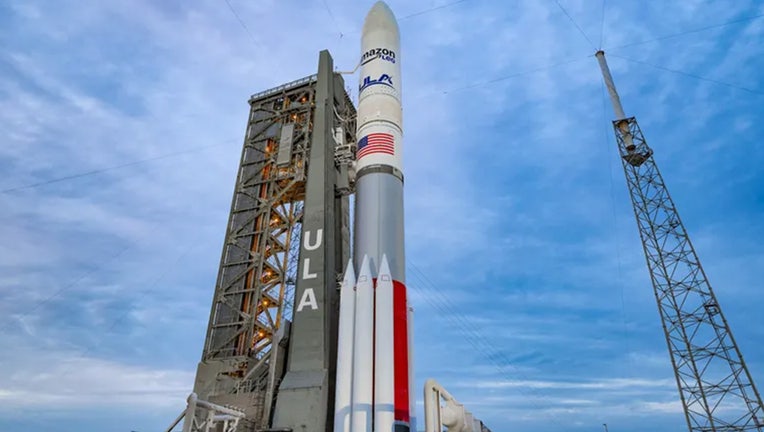
The United Launch Alliance (ULA) Vulcan rocket sits on Space Launch Complex 41 at Cape Canaveral Space Force Station at sunset. (Credit: United Launch Alliance)
An attempt to launch 40 broadband satellites into orbit for retail giant Amazon failed Sunday after the rocket carrying them suffered an anomaly approximately 10 minutes after taking off from Cape Canaveral, Florida.
What we know:
Sunday’s mission, dubbed Amazon Leo 1, was the first of the 38 that were planned by United Launch Alliance for the Seattle-based web retailer, ULA explained. The launch happened at approximately 12:46 p.m. The rocket made it past booster separation and continued for several more minutes before the unnamed issue arose.
What we don't know:
ULA indicated shortly after the failure that its team is reviewing the data that was collected during the aborted flight but has not identified the cause.
RELATED: 24 hours just to say 'hello': Voyager 1 nears historic 1 light-day mark
What they're saying:
"Every flight generates data, and every flight teaches us something. Since the anomaly just occurred, we don’t have any specific data yet to understand what occurred today," ULA wrote in a post on X.
In its statement on the failure, ULA promised its customers full transparency in its investigation and pledged to work with Amazon and other organizations to determine what needs to be done to begin launches again.
Amazon plans satellite network
The backstory:
The mission was meant to deliver 40 advanced broadband satellites into low-Earth orbit. The satellites are designed to provide internet access to people in locations that are not currently accessible by existing networks, and, while there were only a few dozen satellites on this mission, Amazon plans to eventually have more than 3,000 in coordinated orbits.
Dig deeper:
The Amazon Leo 1 launch was originally supposed to happen early Saturday but had to be pushed back a day because of a network communication issue.
The Source: Information for this article was taken from ULA, Amazon, and WOFL coverage. This story was reported from Orlando, Florida.