

Josh Shapiro’s second-term push for PA governor: Key issues, background, polling
PENNSYLVANIA - With Election Day less than three weeks away, Gov. Josh Shapiro is asking Pennsylvania voters for a second term as he faces Republican state Treasurer Stacy Garrity on the Nov. 3 ballot.
Shapiro, alongside Lt. Gov. Austin Davis, is running on a first-term record he says shows government can still get things done, even with a divided legislature. Garrity argues the state has stalled under the governor's leadership.
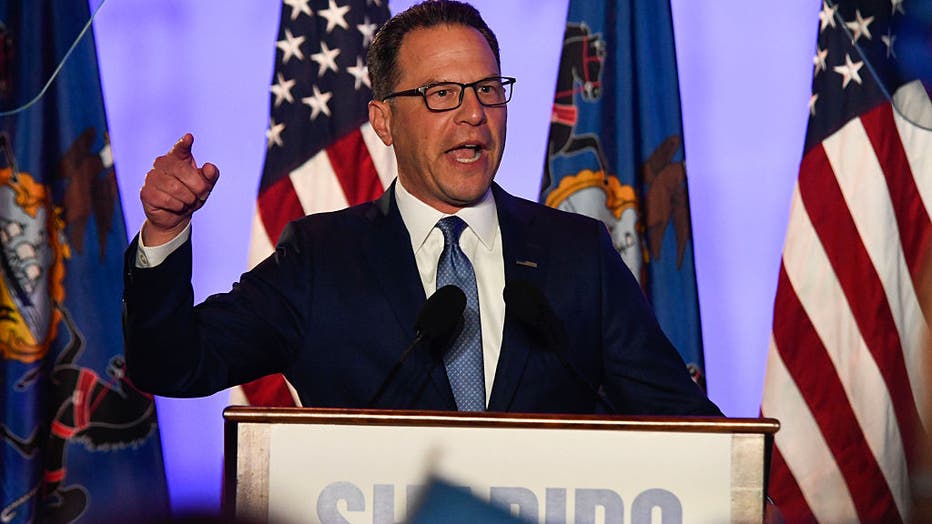
WARMINSTER, PENNSYLVANIA - MAY 19: Governor Josh Shapiro speaks during a Primary Election night event at The Fuge on May 19, 2026 in Warminster, Pennsylvania. Governor Shapiro is running unopposed in the Democratic midterm primary election. (Photo by
From Montgomery County to the governor’s office
The backstory:
Shapiro’s path to Harrisburg began in the Philadelphia suburbs. He spent part of his early childhood on a Navy base, where his father, Steven, was a medical officer, before the family moved to Dresher in Montgomery County. There, his father worked as a pediatrician and his mother, Judi, as a teacher. After college at the University of Rochester, he married his high school sweetheart, Lori Ferrara, in 1997, and later earned his law degree from Georgetown. The couple has four children.
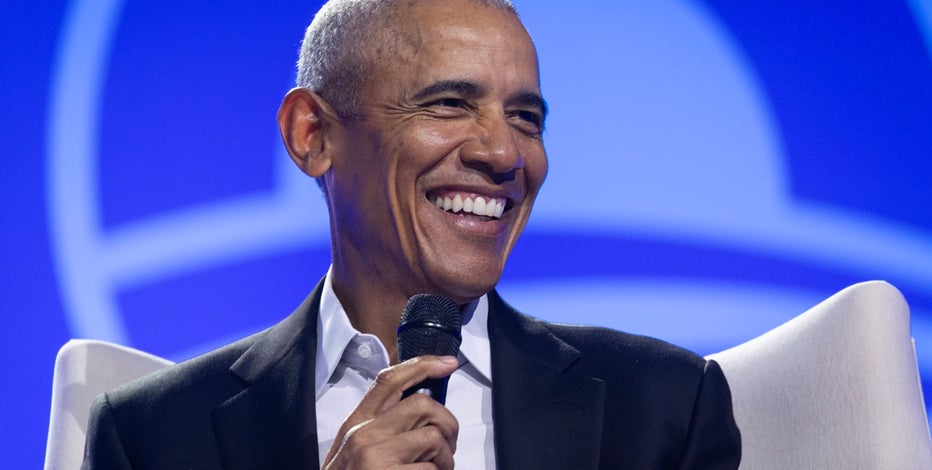
Former President Barack Obama endorses Josh Shapiro for reelection
Pennsylvania Governor Josh Shapiro earned the endorsement of former President Barack Obama for reelection in the state's gubernatorial race.
His first election came in 2004, when he won a state House seat. He later chaired the Montgomery County commissioners from 2012 to 2017, then won the attorney general’s office in 2016. In 2022, he defeated Republican Doug Mastriano for governor by nearly 15 points. Shapiro reflects on that journey, and on the role of faith and family in his life, in his book "Where We Keep the Light."
Making the case for a second term
What they're saying:
On the campaign trail, Shapiro points to what he describes as concrete results. His campaign says he has invested more in public education than any governor before him, hired hundreds of new law enforcement officers, created thousands of new jobs, and put money back in residents’ pockets.
Education has been a centerpiece of that campaign, though the funding increases have come against a legal backdrop. A court ruled that Pennsylvania’s school funding system was unconstitutionally inequitable, and lawmakers have responded by sending additional money to the districts identified as underfunded. Shapiro also highlights free school breakfast. The program launched in October 2022 under Gov. Tom Wolf and was initially meant to last only one school year. Shapiro’s first budget kept it going with a $46.5 million boost.

Governor Josh Shapiro delivers Primary Night remarks
Governor Josh Shapiro delivers remarks and kicks off the general election alongside supporters and local leaders in Bucks County after polls close across Pennsylvania on primary night.
Looking ahead, Shapiro says he would use a second term to keep increasing education funding, raise the minimum wage, and write abortion rights into state law. He is also pushing a 52% tax on skill game machines, which his administration estimates would bring in $2 billion a year.
"Every step of the way, I’ve stood up for my fellow Pennsylvanians, sometimes in a court of law and other times simply refusing to back down, refusing to cast certain Pennsylvanians aside and always by speaking truth to power," Shapiro said while announcing his run in January. "I will not let anyone mess with Pennsylvania and I will always have your backs."
Garrity’s critique
The other side:
Garrity sees that record differently, and she made her case directly to Shapiro at the campaign’s only debate. She accused him of repeatedly signing budgets that drew down the state’s surplus, and of shifting his position on school vouchers. She also faulted him for never delivering the $250 gas rebate he had promised.
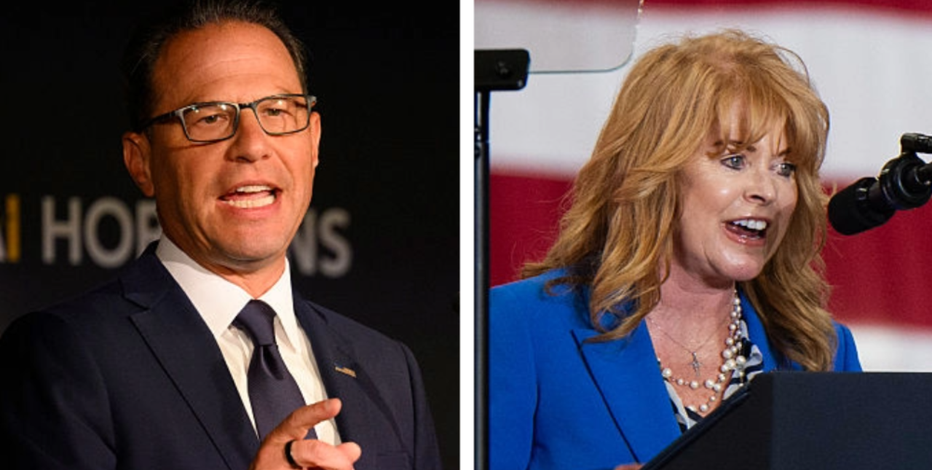
Shapiro-Garrity debate recap: Key takeaways from the Pa. governor's race
Incumbent Democratic Gov. Josh Shapiro and Republican State Treasurer Stacy Garrity faced off on stage in Harrisburg on Wednesday, Oct. 7 for their first and only debate.
Shapiro countered that Pennsylvania’s economy has seen "unheard-of growth," and reminded viewers several times that he can only enact what a divided legislature will pass. In one notable moment, he confirmed he no longer supports the death penalty.
2028 speculation
Dig deeper:
The debate also raised a question that has followed Shapiro for much of the year: whether he plans to run for president. He sidestepped it, declining to commit to serving a full four-year term and saying his focus is on reelection. Voters at home seem divided on the idea. In a February Quinnipiac poll, 40% said he would make a good president and 43% said he would not.
Where the race stands
By the numbers:
The latest polling suggests Shapiro enters the final weeks with a wide advantage. A Quinnipiac University poll released Oct. 7 found him leading Garrity 59% to 34% among likely voters. The poll surveyed 1,159 people between Oct. 1 and 5 and has a margin of error of plus or minus 3.9 points. Krawchuk received 2%.
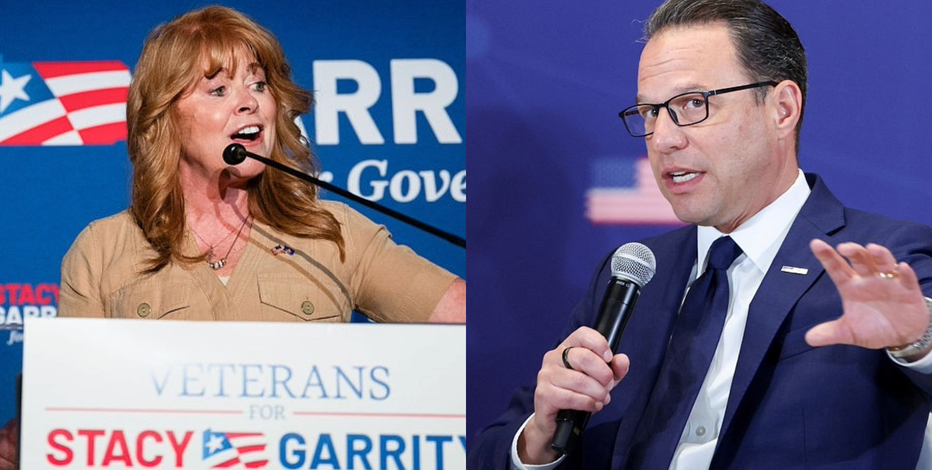
Shapiro holds 25-point lead over Garrity in governor's race as Election Day looms: poll
As the Pennsylvania governor's race enters its final stretch, Democratic incumbent Josh Shapiro continues to hold a dominant position over Republican challenger Stacy Garrity.
The poll also shows Shapiro reaching beyond his base. He carries 95% of Democrats, 17% of Republicans, and leads among independents 62% to 23%, with a 63% job approval rating. His edge held across every issue voters were asked about:
- Growing the state's economy: Shapiro 55%, Garrity 35%
- Lowering the cost of living: Shapiro 55%, Garrity 33%
- Handling taxes: Shapiro 56%, Garrity 35%
- Handling health care: Shapiro 59%, Garrity 30%
Quinnipiac polling analyst Tim Malloy summed it up by saying the contest "looks like a rout." The money tells a similar story: Shapiro has raised roughly $55 million to Garrity’s $5.3 million, according to recent filings, and his ads have outnumbered hers 43 to 1.
The Source: Information from this article was sourced from the Quinnipiac University Pennsylvania Poll released Oct. 7, Gov. Shapiro’s official state biography and campaign website, the Oct. 7 gubernatorial debate, and reporting from Spotlight PA, City & State PA, Axios and the Associated Press.