

Total lunar eclipse visible in Philly area Tuesday morning: When and how to watch
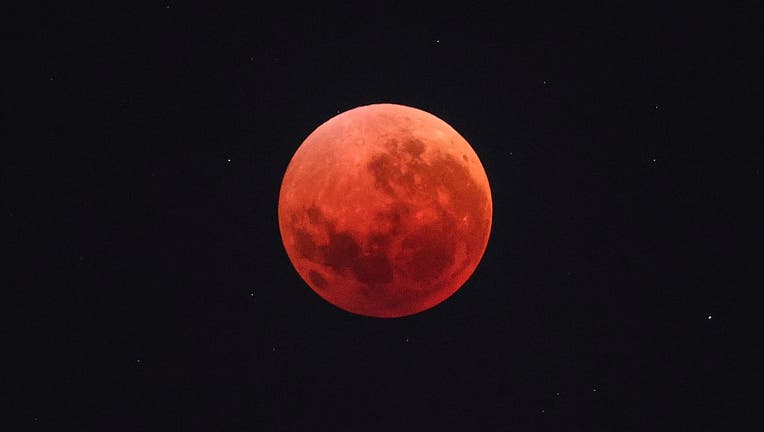
The "Blood Moon" is pictured during an eclipse in the night sky over Sydney on September 8, 2025. Stargazers had a chance to see a "Blood Moon" on the night of September 7-8 during a total lunar eclipse visible across Asia and swathes of Europe and A
PHILADELPHIA - Rise and shine! A stunning sight is about to grace Philly skies, and it won't happen again until 2028.
What we know:
A total lunar eclipse will be visible in the Philadelphia area early Tuesday morning as the Earth makes its way between the sun and moon.
The astronomical phenomenon will cast a reddish glow, resulting in what is also called a "blood moon."
It is a rare sighting, because this will be the last total lunar eclipse visible anywhere on Earth until 2028.
Viewing times for Philadelphia
Timeline:
The eclipse will be visible on Tuesday during the early morning hours, with totality lasting about 58 minutes:
- 3:44 a.m. – Eclipse begins
- 4:50 a.m. – Partial eclipse becomes visible
- 6:04 a.m. – Total eclipse begins
- 6:32 a.m. – Moon begins to set
The best time for Philadelphia to see totality will be at 6:29 a.m.
Where is the total lunar eclipse visible?
Big picture view:
More than 40% of the world's population will be able to see the total lunar eclipse, according to Space.com.
In Philadelphia, skywatchers are encouraged to get a clear view of the western horizon before and around sunrise for the best chance to see totality as the Moon sets.
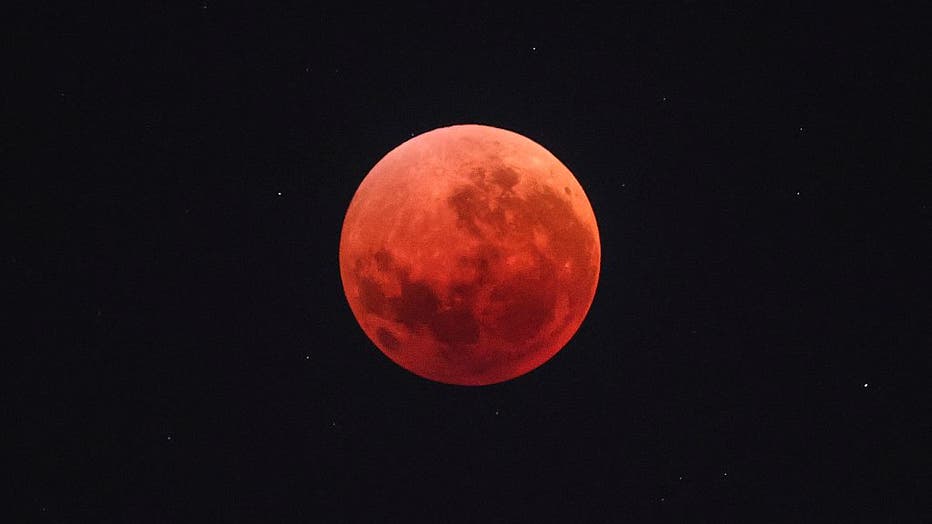
The "Blood Moon" is pictured during an eclipse in the night sky over Sydney on September 8, 2025. Stargazers had a chance to see a "Blood Moon" on the night of September 7-8 during a total lunar eclipse visible across Asia and swathes of Europe and A
What is a total lunar eclipse?
Dig deeper:
The National Weather Service describes lunar eclipses as the moment the sun casts Earth's shadow on the Moon.
"The Earth must be physically between the Sun and Moon with all three bodies lying on the same plane of orbit. A lunar eclipse can only occur during a Full Moon and when the Moon passes through all or a portion of Earth's shadow."
For it to be a total lunar eclipse, the entire Moon must pass into the Earth's umbral shadow.
Is it safe to look at a total lunar eclipse?
What you can do:
Unlike a solar eclipse, lunar eclipses are safe to view with the naked eye, or through binoculars or a telescope.
When is the next total lunar eclipse?
Why you should care:
This total lunar eclipse will be the only total lunar eclipse of 2026 visible from North America, and it’s the last until late 2028, making it a rare chance for skywatchers in the region.
The Source: This article was written using information from NASA, Space.com and Starlust guides.