

Swords, arrowheads dating back to Bronze Age seized from shipment in Philadelphia
PHILADELPHIA - U.S. Customs and Border Protection officers in Philadelphia recently seized dozens of ancient swords and arrowheads, believed to be nearly 4,000 years old, after they arrived in a shipment from the United Arab Emirates.
What we know:
Officers seized 36 copper-alloy short swords and 50 copper-alloy arrowheads on Feb. 18 after the items arrived on an express delivery flight from the United Arab Emirates. The shipment was destined for Jacksonville, Fla., and was labeled as metal decoration articles.
CBP officers x-rayed the shipment and found sword-like objects, prompting them to open the package and discover the swords and arrowheads. Officers suspected the items were cultural artifacts and detained the shipment for further investigation.
The shipment was authenticated as nearly 4,000 years old by an archaeologist.
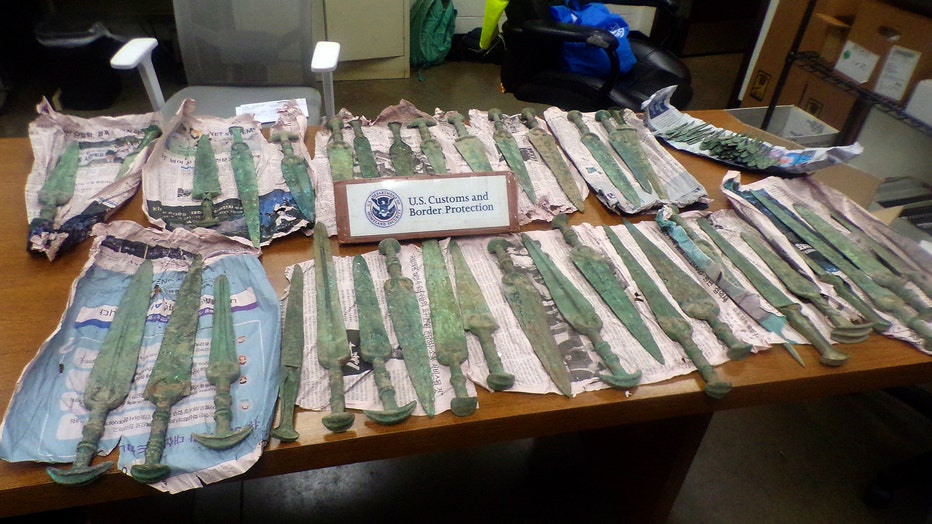
Officers seized 36 copper-alloy short swords and 50 copper-alloy arrowheads on Feb. 18 after the items arrived on an express delivery flight from the United Arab Emirates.
What they're saying:
On Feb. 13, an archaeologist from a local Philadelphia university authenticated the swords and arrowheads as dating to the later 2nd millennium BCE, from the region near the Talish Mountains in Iran. The artifacts are suspected to have come from illicit excavations of burial sites.
"Customs and Border Protection officers strive to rescue cultural artifacts from the grips of illicit international traders who plunder and exploit another nation’s heritage for profit," said Elliot N. Ortiz, CBP’s Acting Area Port Director in Philadelphia.
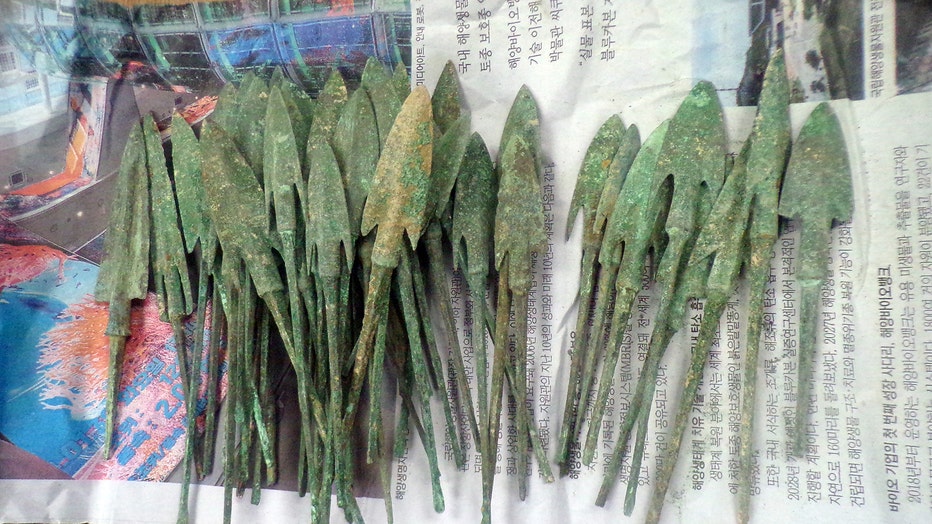
The shipment was authenticated as nearly 4,000 years old by an archaeologist.
"The deceptive practices used to smuggle these treasures into the United States not only violate our import laws but also undermine efforts to preserve and protect the integrity of cultural history."
CBP officers will keep the antiquities safe until a final decision is made about their future.
Why you should care:
Most countries have strict laws protecting their cultural property, including export controls and national ownership. Even if someone buys such artifacts from a business in the country of origin or elsewhere, that does not guarantee legal ownership for import into the United States.
Importing these items is only allowed when an export permit from the country of origin is provided. Authorities warn that some sellers may offer fake export certificates.
The backstory:
The shipment first arrived in Philadelphia on Oct. 16 and was flagged for further review after officers noticed irregularities during x-ray screening. The National Targeting Center’s Antiquities Unit and a local archaeologist were brought in to assist with the investigation.