

Penn Engineering working on 'world's smallest' autonomous robots
Penn Engineering works on 'world's smallest' autonomous robots
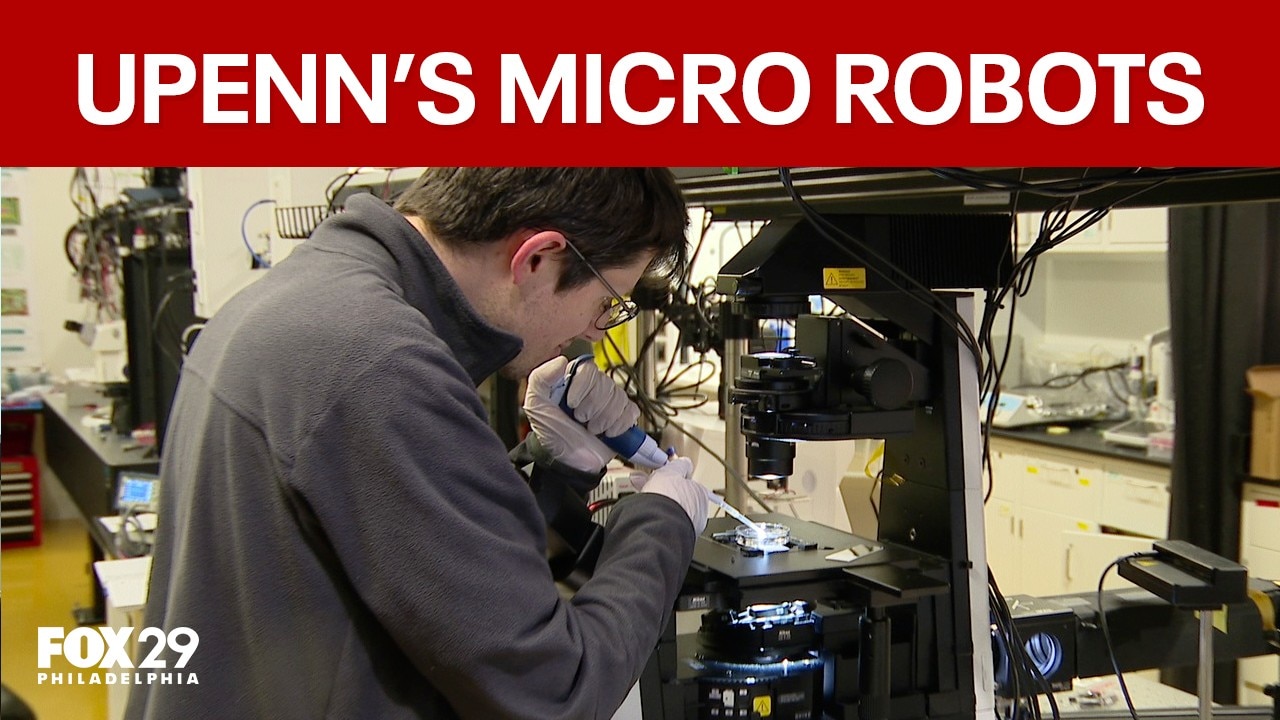
Penn Engineering researchers are developing what they’ve coined as the world’s smallest autonomous robots tinier than a grain of salt. Here’s what we know.
PHILADELPHIA - Over at the University of Pennsylvania, research is being done to change the medical world as we know it.
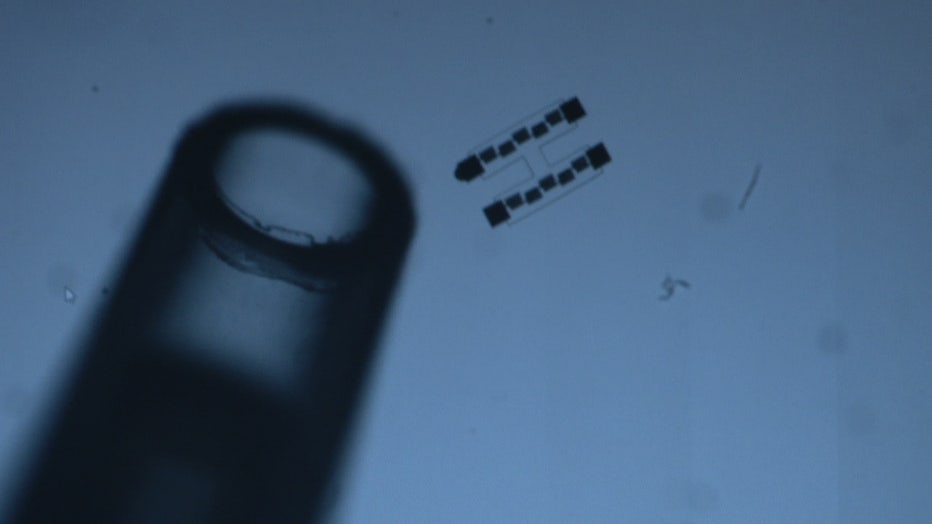
Penn Engineering researchers there are developing what they’ve coined as the world’s smallest autonomous robots, tinier than a grain of salt. The micro robot looks like a black speck with the eye, but sensors and a computer are all packed inside.
What they're saying:
Marc Miskin, assistant professor of electrical and systems engineering at UPenn, said they’ve been interested in microscopic robots since about 2016, and they’ve been building them smarter every couple years.
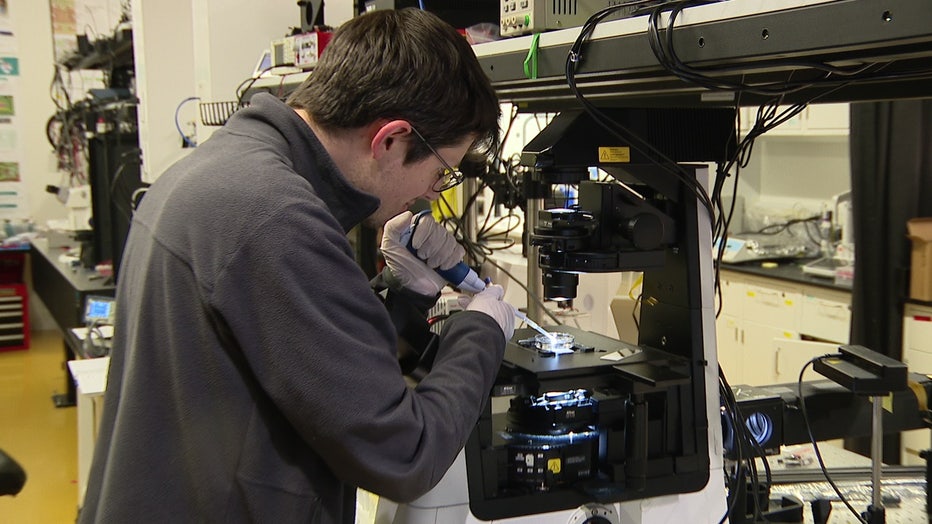
"First one was to build something that could kind of walk around and something that could walk around on its own," said Miskin. "And the robot we’re talking about today is a robot that can also make decisions and choose what it wants to do based on what it sees in the world around it."
The robot as it is today has three main parts: a sensor, a computer and a way to act or move around.
"This is sort of the first robot to incorporate all three of those things into a very tiny package," said Miskin.
What we know:
Since the robot is so small, physics is able to help out in a big way.
"The way it works is, the robot creates an electric field in water around it, and the field causes particles in the water to move," said Miskin. "When they move, it creates a flow and that flow pushes on the robot."
SUGGESTED: NASA seeking summer college interns - how to apply for an out-of-this-world work experience
Other robots Miskin has built have legs which can operate in complex environments, like tissue.
"We’re even working on legged robots that can kind of come out of the water and move around on land," said Miskin.
A surprising thing about these micro robots is the cost, with each one costing under a penny to produce.
What's next:
There’s still a long way to go before we see these in places like the medical field, but Miskin sees this as a catalyst for improving health outcomes.
"You are just a big machine basically made of cells, of little robots. And if you had something that could sense and take action at the same scale, you have all kinds of remarkable new opportunities to treat and cure disease," he said.
The ultimate vision is to use the robots to fight cancer by applying electric fields, to examine root canals and address nerve pain.
Miskin said the research team is also now looking into coatings that would allow robots to function within the body.
Penn Engineering is partnering with the University of Michigan.
The Source: Information in this story is from Penn Engineering and Professor Marc Miskin.