

What is the mile-a-minute plant in Pennsylvania? Invasive weed to watch this spring
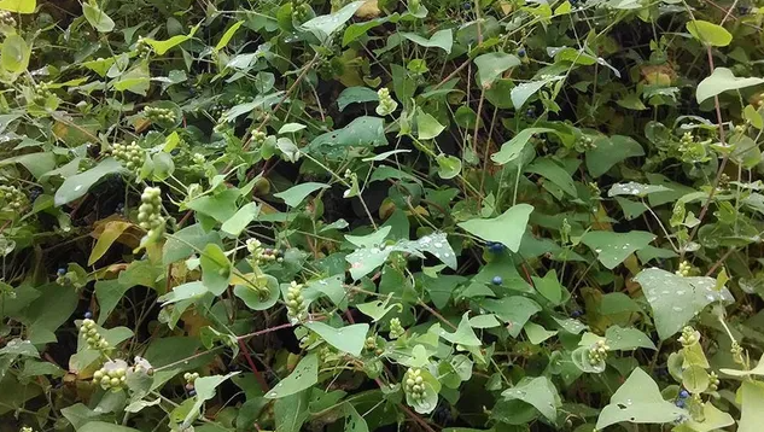
Mile-a-Minute vine; Photo credit: Dave Jackson
PENNSYLVANIA - As temperatures rise, a fast-growing invasive plant known as "mile-a-minute" weed begins to reappear across Pennsylvania, raising concerns for homeowners and environmental experts.
What is the mile-a-minute plant?
Mile-a-minute weed, also known as Persicaria perfoliata, is an invasive vine originally from Asia that has spread widely across Pennsylvania and other parts of the Northeast.
The plant gets its name from its rapid growth — it can grow up to several inches in a single day under the right conditions.
It is classified as a noxious weed in Pennsylvania, meaning it is widespread and harmful to the environment.
How to identify it
Experts say mile-a-minute weed has several distinctive features:
- Triangular, light green leaves
- Thin vines covered in small barbs or hooks
- Circular, cup-like leaves at nodes along the stem
- Small white flowers and later bright blue berry-like fruits
The barbs help the plant climb over other vegetation, allowing it to spread quickly.
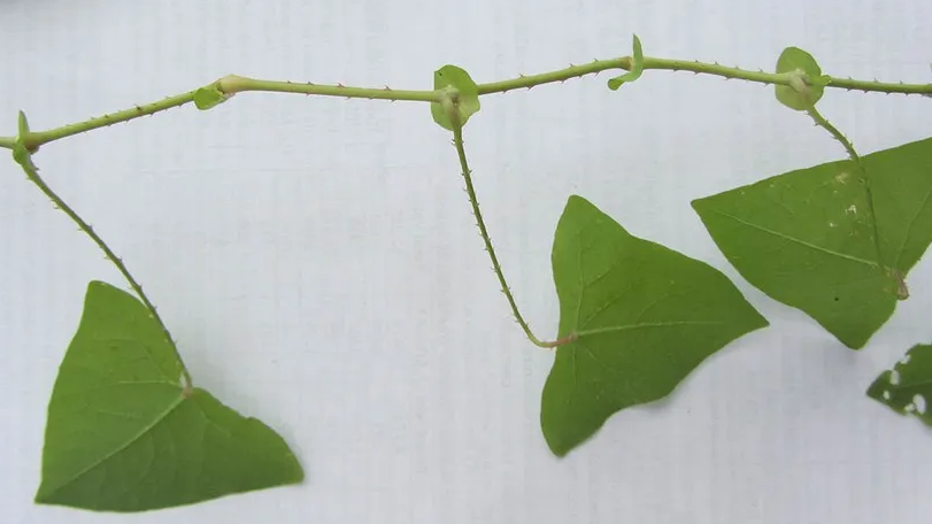
C. Barbed stem and petioles, Mile-a-Minute weed. (Photo: PennState Extension via extension.psu.edu/mile-a-minute)
Why it’s a problem
Mile-a-minute weed grows aggressively and can quickly overtake native plants.
It forms dense mats that block sunlight, weaken surrounding vegetation and can even kill trees and shrubs over time.
Because it spreads easily through seeds carried by birds, animals and water, it can quickly take over new areas.
Why it shows up in spring
The plant is an annual, meaning it dies off in the fall but returns each year from seeds that germinate in early spring.
That’s why it often starts appearing again as temperatures warm across Pennsylvania.
What you can do:
Experts recommend removing mile-a-minute weed early in the season before it produces seeds.
Pulling the plant by hand or cutting it back can help control its spread, especially in smaller areas.
The Source: This article was written using information from Penn State Extension and the U.S. National Invasive Species Information Center.