

Public trust in government shifts depending on which party holds power, poll shows
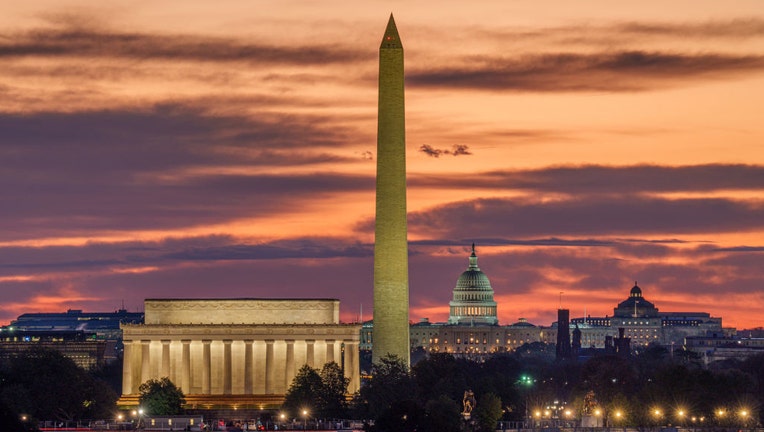
Sunrise turns the sky shades of orange behind the (L-R) Lincoln Memorial, Washington Monument, and US Capitol Building on March 18, 2024, in Washington, DC. (Photo by J. David Ake/Getty Images)
WASHINGTON - Americans’ confidence in federal government institutions remains near historic lows.
Dig deeper:
According to a recent Gallup poll, big differences in trust between political parties help explain why overall public trust in government has dropped over time. People who support the president’s party tend to show much higher trust in government, while those from the opposing party show much less.
In recent decades, trust among the opposition — whether Democrats during Republican presidencies or Republicans during Democratic ones — has fallen sharply.
RELATED: Government Shutdown 2025 Update: Senate advances plan to end standoff
Independents have also lost confidence in government, with their trust steadily declining over the years.
Since the 1970s, average trust among people from the opposing party has dropped by 35 points, and among independents by 26 points.
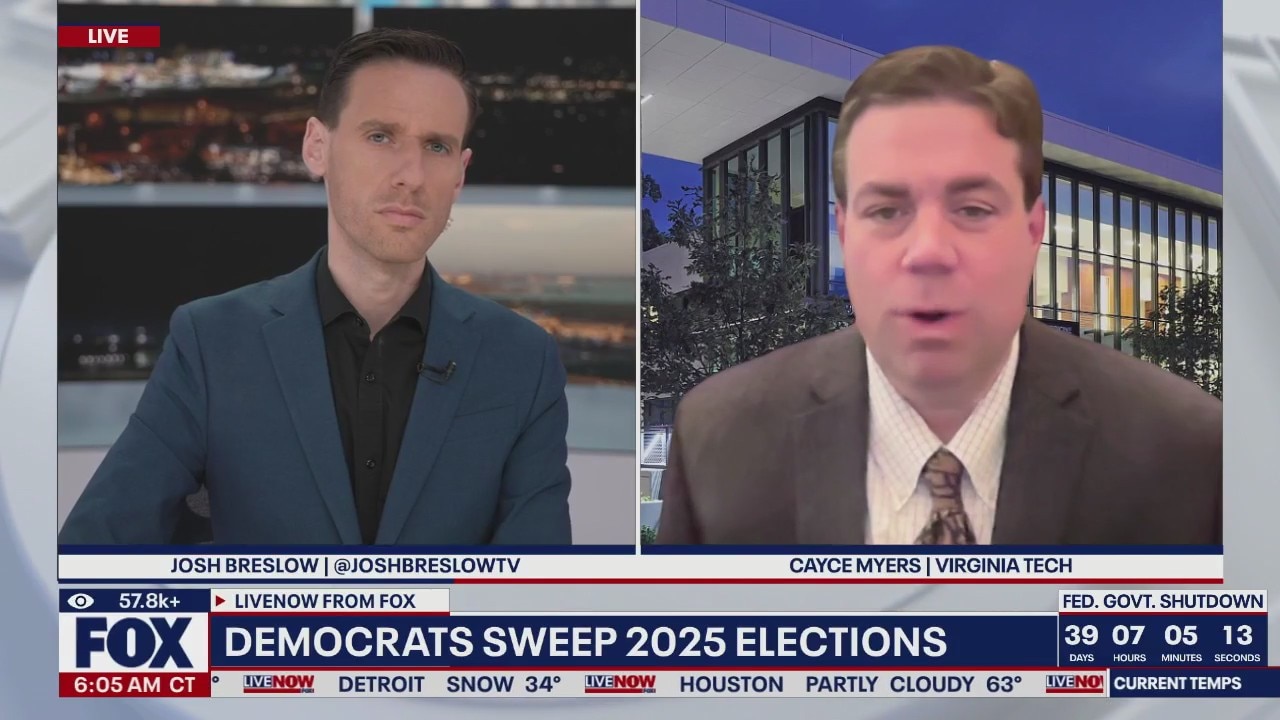
Election recap: Democrats sweep key races
Democrats scored major victories in key races across the United States. LiveNOW's Josh Breslow breaks down election results with Virginia Tech's Cayce Myers.
By the numbers:
Gallup’s Sept. 2–16 Governance poll shows that overall trust levels remain about the same as last year.
However, this apparent stability hides major partisan shifts.
Republican confidence has risen sharply across all five areas — especially for the executive branch (up 83 points), and for the government’s handling of international (up 64 points) and domestic issues (up 57 points).
In contrast, Democrats’ trust has dropped steeply in these same areas, falling between 56 and 78 points, with a notable decline in confidence in the legislative branch as well.
Trust in government shifts with party control
By the numbers:
Gallup first began tracking Americans’ trust in the federal government between 1972 and 1976, and again from 1997 to today. In the 1970s, about 64% of people who opposed the sitting president’s party trusted the government to manage international issues. Today, that number has fallen to just 20%, with most of the decline occurring since the 2000s.
RELATED: Government Shutdown: Flight cancellations expected to continue even after stalemate ends
Similarly, trust in the government’s ability to handle domestic issues has dropped from 54% among the president’s opponents in the 1970s to only 18% today. Confidence in the executive branch has also plunged among this group, from 49% to just 7%.
Supporters of the president’s party express about the same level of trust in the federal government as they did 50 years ago. Trust in the government to handle domestic issues averages 71% this decade, nearly matching the 70% average from the 1970s. Confidence in the government’s ability to manage international issues has dipped slightly, from 82% in the 1970s to 76% today.
Trust in the executive branch among supporters of the president’s party is actually higher now—87% compared with 75% in the 1970s. However, the lower figure from that decade may reflect the impact of the Watergate scandal. In recent decades, trust levels among in-party supporters have remained consistently high, ranging from 85% to 91%.
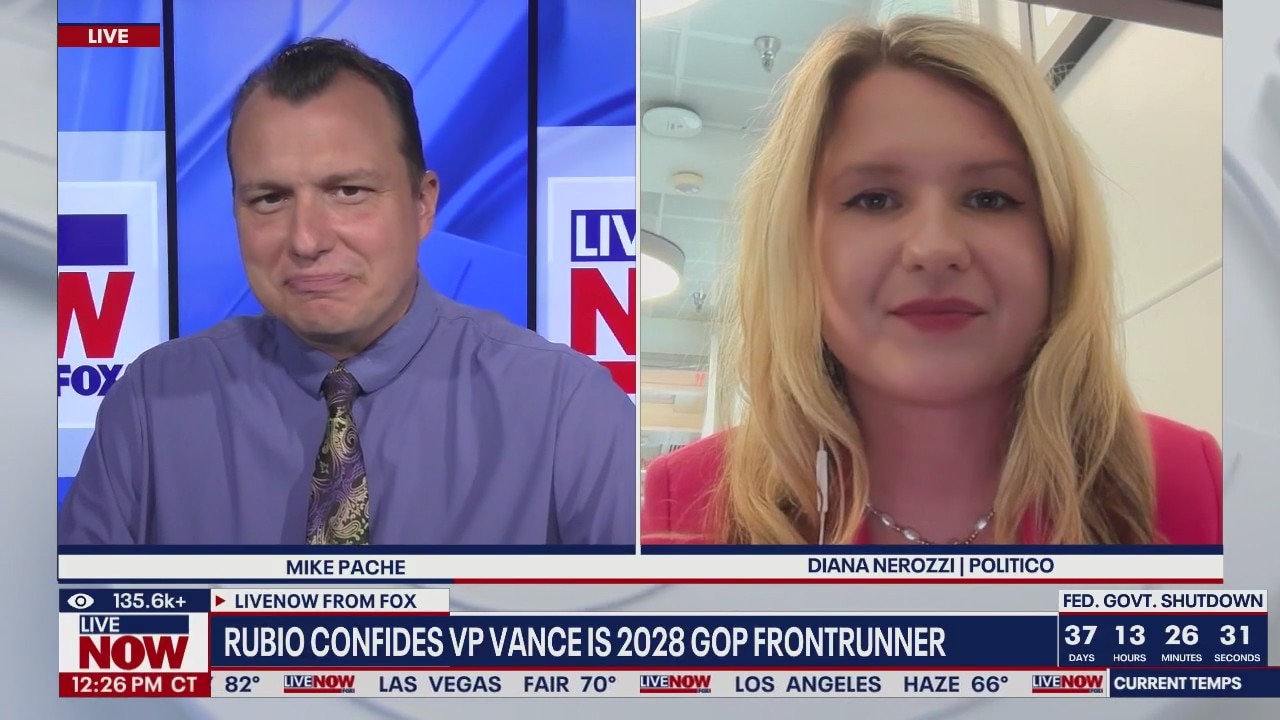
Rubio confides VP Vance is 2028 GOP frontrunner
LiveNOW's Mike Pache brings Politico reporter Diana Nerozzi into the conversation for more details regarding Secretary of State Marco Rubio privately telling confidants that Vice President JD Vance is the frontrunner for the 2028 Republican nomination.
Big picture view:
Gallup says over the past 50 years—especially in the last two decades—Americans’ trust in government has changed dramatically. Far fewer people trust the federal government today, largely because confidence has collapsed among those who do not share the president’s party affiliation.
In earlier decades, people who opposed the president’s party still showed some trust in government, driven by respect for the nation’s institutions, laws, and traditions. Today, trust is more closely tied to partisanship. Many Americans view government through the lens of their distrust for those with opposing political views—a broader societal shift that poses a major challenge to rebuilding faith in government institutions.
The Source: The information in this story comes from Gallup’s Sept. 2–16 Governance poll, which measures Americans’ trust in federal government institutions. This story was reported from Los Angeles.