

Hidden lunchbox hazards? What Consumer Reports found in kids' snacks

DIY snackle boxes: Making back to school lunches healthy and fun
The Suburban Soap Box has all the tips and tricks to make snackle boxes at home, including some unexpected personal touches.
When packing school lunches, most parents focus on sugar content or artificial dyes. However, a recent investigation by Consumer Reports reveals that what you can’t see on the nutrition label might be just as important.
After testing 21 popular children's snack products, including crackers, chips, granola bars, yogurt, fruit snacks, seaweed, applesauce, string cheese, and processed meat, Consumer Reports found that 14 contained concerning levels of chemical and processing contaminants.
Almost all the products tested had non-detectable levels of heavy metals, and seven snacks passed with flying colors.
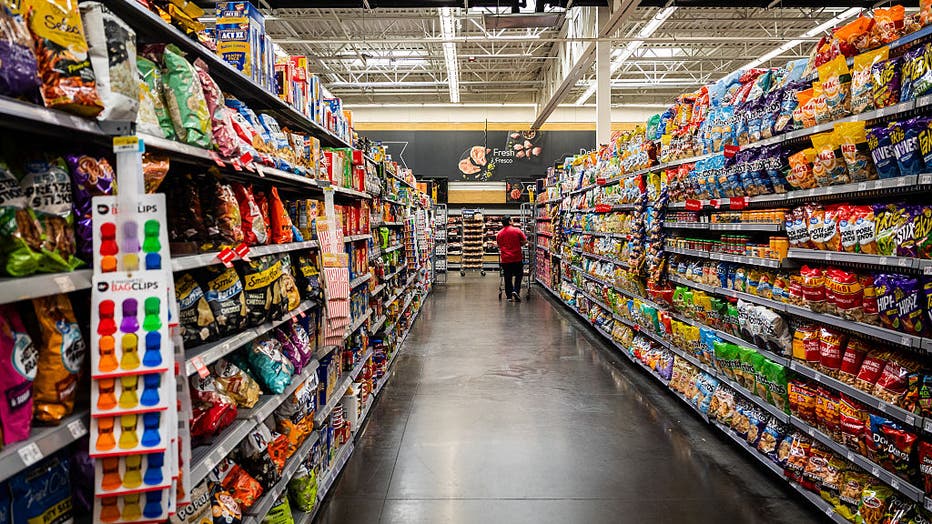
Customer with shopping cart in the snack aisle of a Walmart store in Florida City in the state of Florida in the United States of America (USA) on August 5, 2025. (Photo by Jc Milhet / Hans Lucas / AFP via Getty Images)
Invisible contaminants
What we know:
The primary concern highlighted in the report wasn't an added ingredient, but rather chemicals that form during the manufacturing process itself.
- Acrylamide: A probable human carcinogen that forms naturally when starchy foods (like potatoes or grains) are fried, roasted, or baked at high temperatures. It was found in 13 of the 14 products tested that are prone to it.
- Glycidyl esters (GE) & 3-MCPD: Process contaminants that form when oils, particularly palm and vegetable oils, are refined at high temperatures. Prolonged exposure raises kidney damage and cancer risks. Seven products exceeded CR’s level of concern for GE.
- Phthalates: Endocrine-disrupting chemicals found in plastics that can leach into food from packaging or processing equipment. Ten products had measurable levels, and three exceeded CR's concern limits.
- Heavy metals (lead, arsenic, cadmium): Absorbed from soil and water or introduced during manufacturing. Fortunately, CR's tests showed excellent results: no products had concerning levels of arsenic or lead, and only one (a seaweed snack) raised flags for cadmium.
How the snacks stacked up
Dig deeper:
Based on CR’s testing, here is a breakdown of which snacks are fine for daily consumption and which should be relegated to occasional treats.
One per day is fine
These seven snacks tested well below CR's levels of concern for all contaminants:
- Pirate’s Booty Aged White Cheddar
- Dannon Danimals Pouches, Strawberry
- Frigo Cheese Heads Whole Milk String Cheese
- Stonyfield Organic Yogurt Tubes, Strawberry
- Annie’s Organic Fruit Snacks, Berry Patch
- GoGo SqueeZ Fruitz Applesauce Pouch
- Welch’s Fruit Snacks
A few times a month at most
These products exceeded CR's levels of concern for at least one contaminant, commonly acrylamide, glycidyl esters, or phthalates.
- Annie’s Organic Cheddar Bunnies: DEHP (phthalates), acrylamide, GE
- Lay's Classic Potato Chips: Acrylamide, GE
- Nature Valley Crunchy Granola Bars, Oats ’n Honey: Acrylamide, GE
- Clif Zbar, Chocolate Chip: DEHP (Phthalates), Acrylamide, GE
- Doritos Nacho Cheese Tortilla Chips: Acrylamide, GE
- Takis Fuego Tortilla Chips: Acrylamide, GE
- Pepperidge Farm Goldfish Cheddar Crackers: Acrylamide
- Nabisco Wheat Thins, Original: Acrylamide
Products like Slim Jim Mild Snack Sticks, Nabisco Honey Maid Graham Crackers, MadeGood Organic Chewy Granola Bars, and Gimme Roasted Seaweed Snacks fell somewhere in the middle, earning a "Limit consumption/Don't eat every day" recommendation.
Smart snacking strategies
What you can do:
A completely contaminant-free pantry doesn’t exist, and obsessing over every ingredient label won't eliminate these invisible risks. Instead, experts suggest focusing on realistic risk reduction:
- Embrace variety: Avoid relying on the exact same packaged snack every day. Rotating your kids' favorites limits repeated exposure to the contaminants found in any single product.
- Pivot to whole foods: Because most of these chemicals are introduced during processing, whole foods naturally bypass the issue. Apple slices with seed butter, carrots with hummus, or fresh fruit with yogurt are excellent alternatives to heavily processed items.
- Watch the heat at home: You can reduce acrylamide exposure in your own kitchen by boiling or steaming potatoes instead of frying them, and by lightly toasting bread rather than letting it get dark brown.
- Rethink storage: Store leftover food in glass containers instead of plastic, and never microwave food in plastic, which can encourage phthalates to leach into your meals.
The Source: Information from this article was sourced from a study by Consumer Reports.