

Silicosis: Countertops linked to Massachusetts man's diagnosis
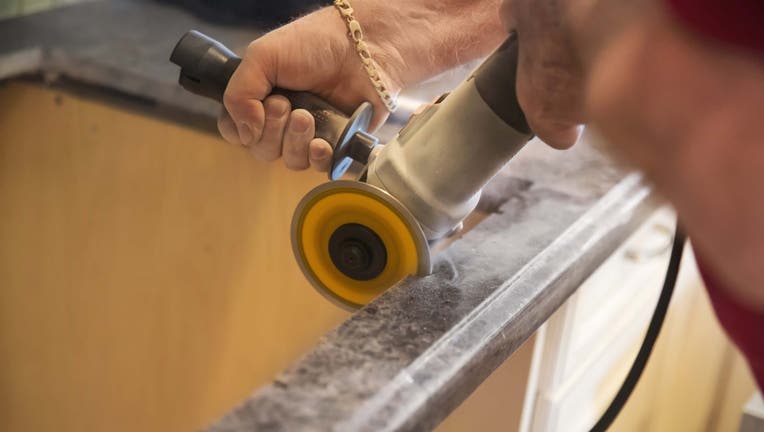
FILE - A man is using a special electric saw to cut a granite counter in a residential kitchen in preparation for installing a new range top. Getty Images
A Massachusetts man has been diagnosed with a life-altering lung disease linked to popular kitchen countertops.
The Massachusetts Department of Public Health confirmed this week that its first case of silicosis had been diagnosed in a Hispanic man in his 40s who, for the past 14 years, worked for stone countertop fabrication and installation companies.
What is silicosis?
Big picture view:
Silicosis is a serious, incurable lung disease caused by inhalation of crystalline silica, which is found naturally in granite and other stones. Silicosis can become progressively disabling and sometimes prove fatal. It almost always results from work-related exposures.
Dig deeper:
Silica dust particles become trapped in lung tissue, causing inflammation and scarring and reducing the lungs’ ability to take in oxygen, according to OSHA.
Symptoms:
Symptoms of silicosis can include shortness of breath, cough and fatigue. Workers exposed to airborne crystalline silica also are at increased risk for lung cancer, chronic obstructive pulmonary disease (COPD) and kidney disease.
What they're saying:
"Silicosis is a devastating, life-altering disease – and one that is also absolutely preventable," said Public Health Commissioner Robbie Goldstein, MD, PhD. "Massachusetts employers in industries where workers are exposed to silica dust have a responsibility to protect their workforce, including from harmful airborne dust. No worker should have to suffer from a chronic and insidious lung disease or possibly die because of a preventable exposure at work."
RELATED: Tanning beds could triple melanoma risk, new study finds
Countertop disease
Big picture view:
Crystalline silica commonly occurs in nature as the mineral quartz, and is found in granite, sandstone, quartzite, various other rocks and sand. Cutting, grinding, chipping, sanding, drilling and polishing these natural and manufactured stones can release various levels of crystalline silica dust particles that can be inhaled if proper protections aren’t in place.
Dig deeper:
Engineered or manufactured stone, also commonly called quartz, is particularly problematic since it has more crystalline silica than natural stone.
By the numbers:
For example, the average percent of crystalline silica in engineered stone is at least 90% in quartz and engineered stone, vs. a 10-45% makeup in granite, according to an OSHA hazard alert.
What you can do:
Certain engineering controls, such as water spraying systems or remote-controlled tools, can be used to mitigate risk, as well as by wearing proper respiratory protection.
Silica cases in the U.S.
Big picture view:
Most engineered stone workers with silicosis in the U.S. were exposed to silica at their jobs for over ten years, although some were exposed for less time.
The backstory:
The first reported case of silicosis in the U.S. associated with exposure to silica dust from engineered stone was identified in Texas in 2014, according to the Massachusetts Department of Public Health. Since then, other states have reported hundreds of cases, and dozens of deaths, particularly in California.
Dig deeper:
In the U.S., most engineered stone workers with silicosis are relatively young, male, and Hispanic/Latino. This largely reflects the demographic composition of this industry’s workforce.
In 2023, over half of workers in this industry were under 45 years old, nearly three-quarters were men, and more than 1 in 3 were Hispanic/Latino, according to the U.S. Census Bureau.
The Source: Information in this article was taken from a Dec. 9, 2025, alert from the Massachusetts Department of Public Health. Background information was taken from OSHA. This story was reported from Detroit.