

What is the polar vortex? Why it matters as snow and Arctic cold threaten the Northeast
PHILADELPHIA - As a winter storm threatens to bring snow and colder air to parts of the Northeast and Mid-Atlantic, meteorologists are once again talking about the polar vortex — a powerful atmospheric feature that can influence how far south Arctic cold travels.
What we know:
The polar vortex is a huge circulation of cold air that spins high above the Arctic in the upper atmosphere. It forms because the North Pole is much colder than areas farther south, creating strong winds that swirl around the region.
Despite how it’s often discussed, the polar vortex is not a storm. It does not cause snow or ice by itself, and it does not suddenly appear during winter. It is a normal feature of Earth’s atmosphere that exists all year long.
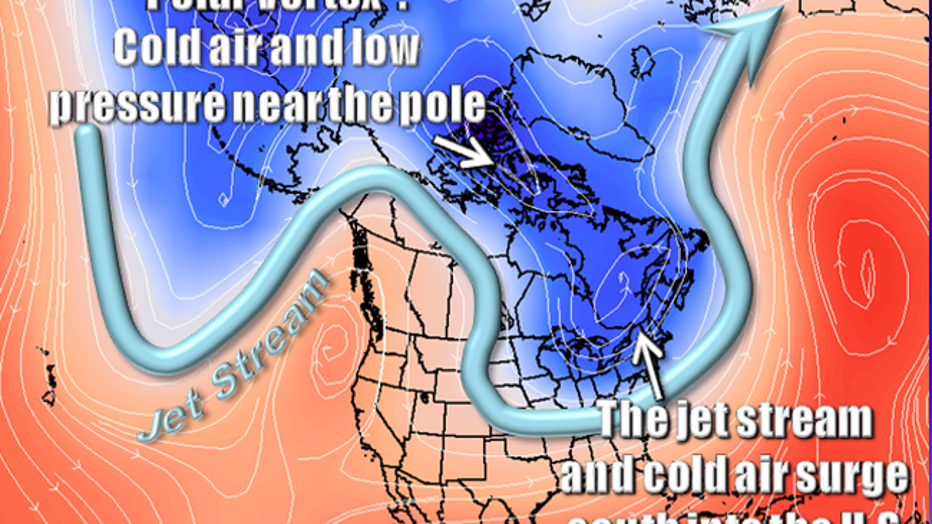
Polar Vortex (NOAA)
How the polar vortex affects winter weather
During winter, the polar vortex usually becomes stronger and more organized, helping keep the coldest Arctic air locked near the North Pole.
Sometimes, however, the vortex can weaken, stretch, or shift. When that happens, cold air that is normally trapped far north can move south into the United States. This can help set the stage for sharp temperature drops, prolonged cold spells, and increased chances of snow.
That’s why meteorologists often mention the polar vortex when forecasting major winter weather events, especially in the Northeast and Mid-Atlantic.
What the polar vortex is not
The polar vortex is often misunderstood, according to the National Weather Service.
It is not a single blast of cold air, and it is not responsible for every cold day during winter. Cold fronts, storm systems, and local weather patterns still play major roles in determining daily conditions.
The term "polar vortex" is usually used when there is a large-scale shift in atmospheric patterns, not just a routine cold snap.
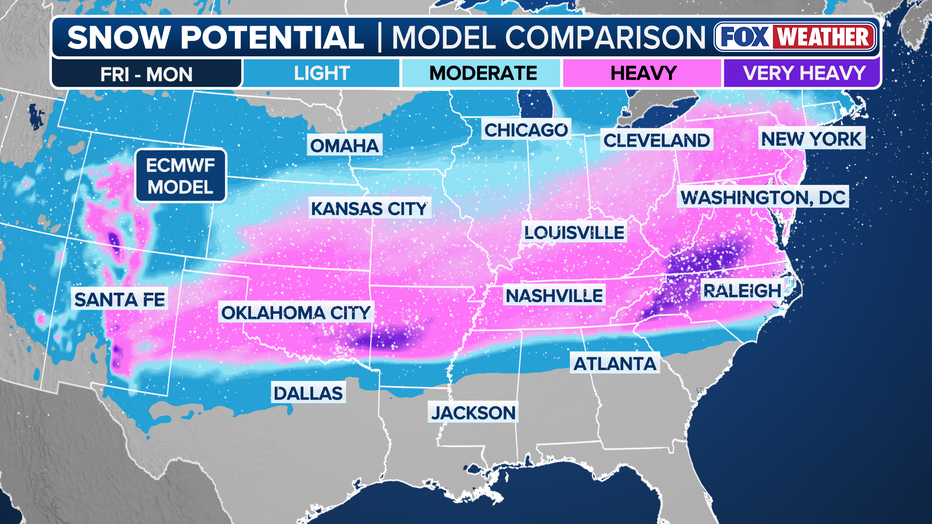
Why forecasters are watching it now
When the polar vortex changes shape or position, it can influence the jet stream, the fast-moving river of air that steers weather systems across North America, according to NOAA.
A wavier jet stream can dip farther south, allowing cold Arctic air to reach places like the Northeast and Mid-Atlantic. That combination of cold air and moisture can increase the potential for snow and hazardous winter weather, depending on how storms develop.
What we don't know:
While meteorologists can identify changes in the polar vortex days or even weeks in advance, exact impacts at the surface depend on multiple factors, including snowfall amounts and how long cold air will last.
Those details typically become clearer closer to a storm’s arrival.
Why you should care:
Understanding the polar vortex helps explain why winter weather can sometimes turn severe very quickly, even in places that don’t usually see extreme cold.
As snow and cold threaten the region, the polar vortex is one of several key atmospheric features that forecasters monitor to help predict how intense winter weather could become.
The Source: This article was written using information from the National Weather Service, NOAA and FOX Weather.