

Decapitate, gut, or throw away: Missouri’s new warning for an invasive species
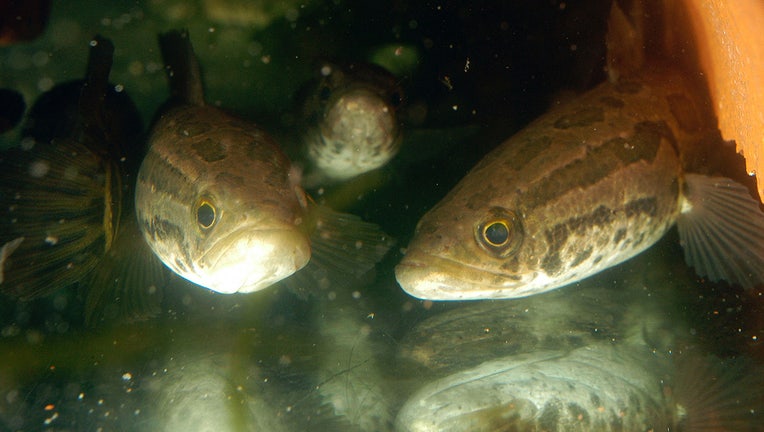
Northern snakehead fish swim in a tank at the Academy of Natural Sciences April 28, 2005 in Philadelphia, Pennsylvania. (Photo by William Thomas Cain/Getty Images)
Cut off their heads, remove their internal organs, or put them in a plastic bag and throw them out. Those are the three suggestions Missouri wildlife officials have for anglers who catch northern snakehead fish from one of the state’s rivers or streams, and there’s a reason why they are being so specific.
Big picture view:
The northern snakehead is considered an invasive species in the Show-Me State, and the state’s Department of Conservation is concerned that it is becoming more established as it spreads from neighboring Arkansas. It is already illegal to import, sell, purchase, or possess the fish in Missouri, and the agency wants to make sure that any that are caught do not return to the water.
What they're saying:
"We anticipate negative effects to our aquatic systems, as the invasive fish competes with our existing fish populations for resources," MDC Invasive Species Ecologist Angela Sokolowski said. "Snakeheads are predatory fish and will likely prey upon our native and sport fish, such as smallmouth bass, potentially causing direct negative impacts to populations."
What you can do:
Wildlife officials are urging anglers not to throw back any northern snakehead that they catch, but to kill it instead. However, they pointed out that a northern snakehead can be harder to kill than other types of fish because the species can breathe air.
RELATED: Watch: Yacht sinks after hitting pod of whales, crew rescued hours later
Tossing a northern snakehead onto the riverbank will not necessarily work because the fish can survive for days out of water if its skin stays moist. It can also survive in a cooler and in other situations that may kill other species, the Department of Conservation explained.
That is why the agency recommends severing their heads, removing their internal organs, or putting the fish in a plastic bag that is then thrown in a trash bin.
What's next:
So far, the fish has only appeared in two rivers, but the agency is trying to keep a close eye on the population because of the potential negative effects of the fish reaching other waterways.
In addition to disposing of the fish, the Department of Conservation is asking anglers to take a picture of the fish and notify the agency of the catch, so it can be tracked. Reports can be made on this MDC website.
The Source: Information for this article was taken from the Missouri Department of Conservation. This story was reported from Orlando.