

The muddy history behind the cast-iron 'boot scrapers' on Philadelphia's oldest streets
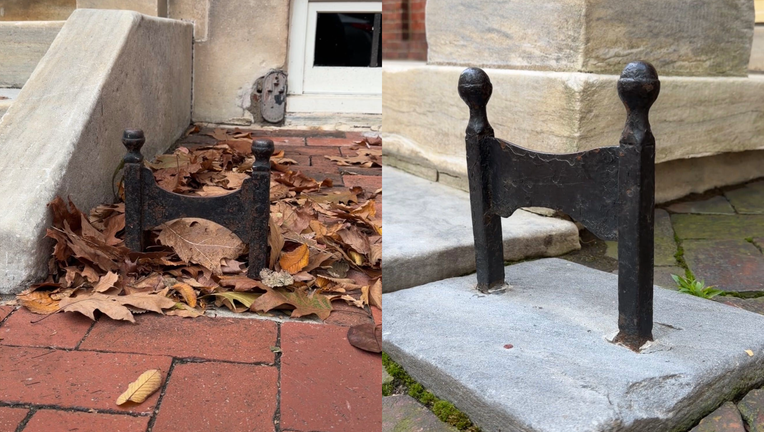
Boot scrapers found in Old City, Philadelphia, in 2026. (FOX 29/Tyler Thrasher)
PHILADELPHIA - If you’ve ever walked down the brick-lined sidewalks of Philadelphia’s historic districts, you’ve likely passed hundreds of tiny, cast-iron relics hiding in plain sight. They’re called boot scrapers, and they were once the only thing standing between a clean parlor and a very dirty street.
WATCH | A Philadelphia Treasure Hunt: Finding The Boot Scrapers
A messy problem
Dig deeper:
Long before modern sanitation, paved roads and street sweepers, navigating Philadelphia by foot was a treacherous task. In the 18th and 19th centuries, residents had to dodge carriages and deal with a daily onslaught of mud, sewage and copious amounts of horse manure.
To avoid tracking that filth onto finely finished hardwood floors, Philadelphians relied on the boot scraper. The everyday fixtures were placed at the doorstep of nearly every rowhouse, bank, church and courthouse as a mandatory pit stop before stepping inside. In fact, arriving at a dinner party without aggressively scraping your boots first was considered careless and highly disrespectful.
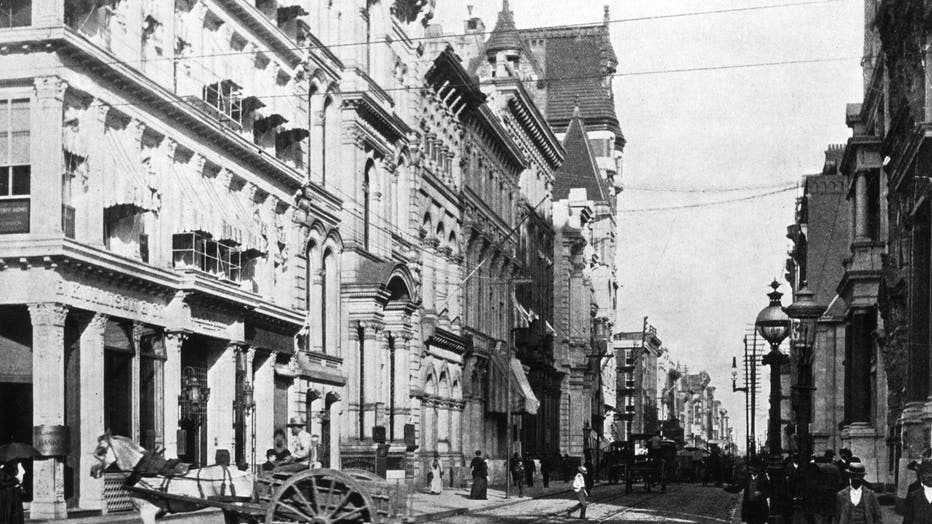
circa 1890: Chestnut Street in Philadelphia, Pennsylvania which runs west from the Delaware River to the western limit of the town and is named after tree growing in the state. (Photo by Hulton Archive/Getty Images)
Utilitarian art
Big picture view:
While their purpose was strictly functional, boot scrapers quickly became decorative neighborhood staples.
According to Hidden City Philadelphia and the local architecture blog Our Philly Row, the scrapers were typically hand-forged by local blacksmiths or produced in cast-iron foundries. Many featured ornate designs, with the most popular shapes resembling harps. Other surviving examples feature marine motifs, regal "Winged Victory" shapes and intricate scrollwork.
Installers would bore holes directly into the heavy marble steps outside a home, then use molten lead to set the iron scrapers securely in place. Others were built directly into the wrought-iron fences and handrails lining a family's stoop.
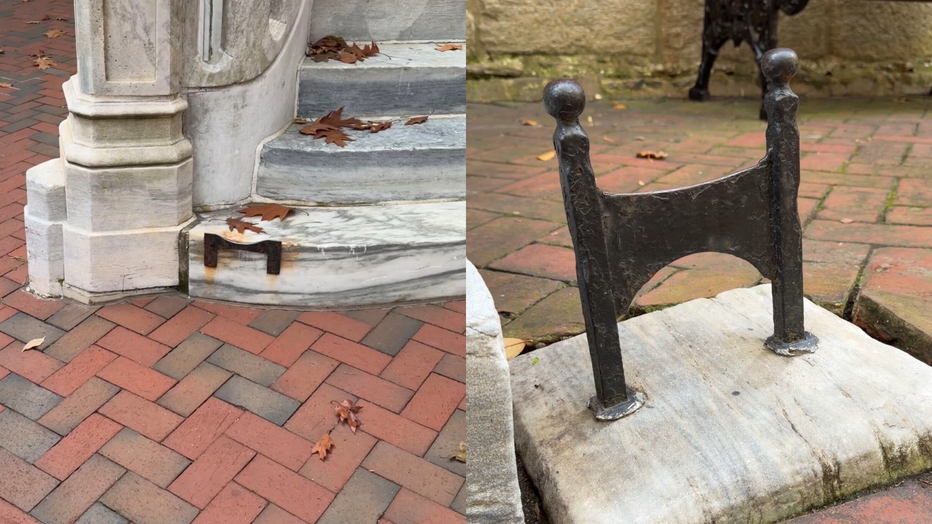
Boot scrapers found in Old City, Philadelphia, in 2026. (FOX 29/Tyler Thrasher)
Where to spot them today
What you can do:
As sanitation standards improved and streets were eventually paved in the late 19th and early 20th centuries, the scrapers fell out of favor. However, a keen eye can still spot them across the city today.
Historical sites like Uncharted Lancaster note that these fixtures remain widely visible across Philadelphia’s oldest blocks. Neighborhoods like Society Hill, Queen Village and Old City serve as open-air museums for these forgotten pieces of ironwork.
Next time you take a stroll past Independence Hall or down a cobblestone street, just look down. You might spot a piece of Philadelphia history right beneath your feet.
The Source: This article was written using historical information and neighborhood documentation from Our Philly Row, Uncharted Lancaster, Hidden City Philadelphia and the Society Hill Civic Association.