

SEPTA launches digital screen pilot program: Here's where they'll be
SEPTA debuts real-time arrival screens at bus stops
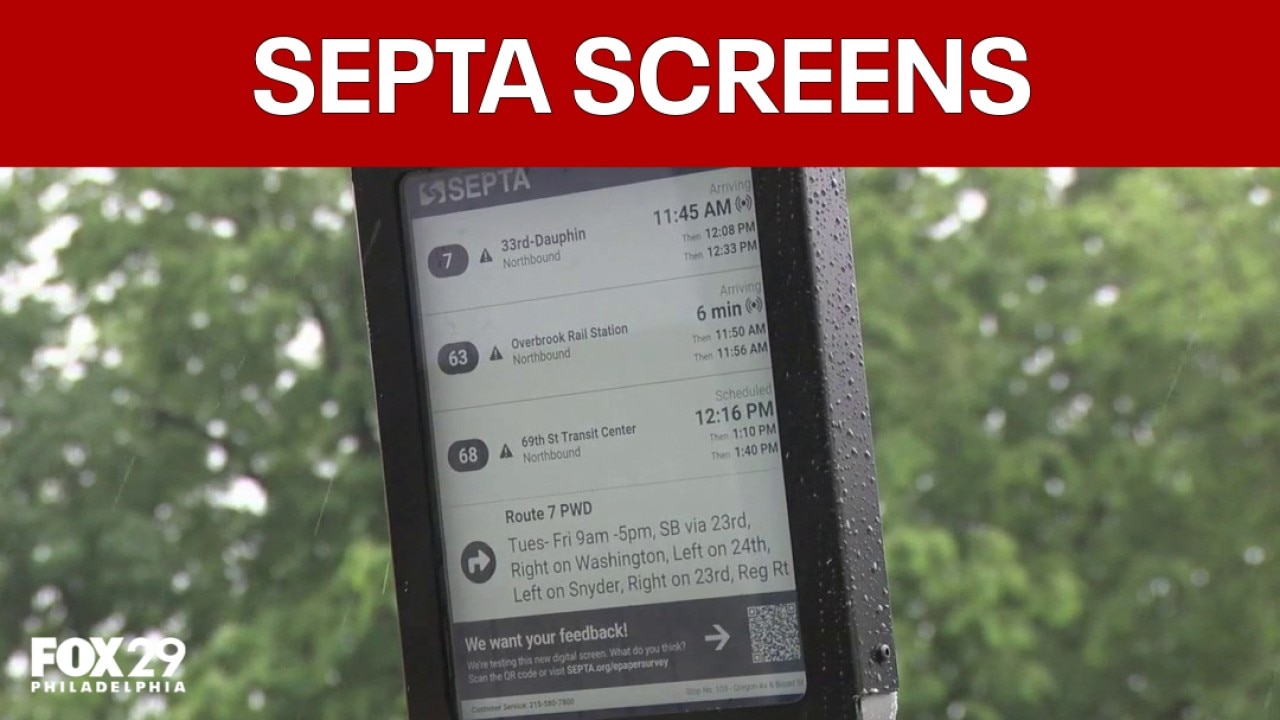
SEPTA has launched a pilot program installing digital screens at select bus stops to show riders exactly when their bus will arrive, according to SEPTA officials.
PHILADELPHIA - SEPTA has launched a pilot program installing digital screens at select bus stops to show riders exactly when their bus will arrive, according to SEPTA officials. The new technology is designed to make public transit more accessible and convenient, especially as Philadelphia prepares for a surge of visitors for the FIFA World Cup, MLB All-Star Game and America 250 celebration.
SEPTA debuts real-time arrival screens at bus stops
What we know:
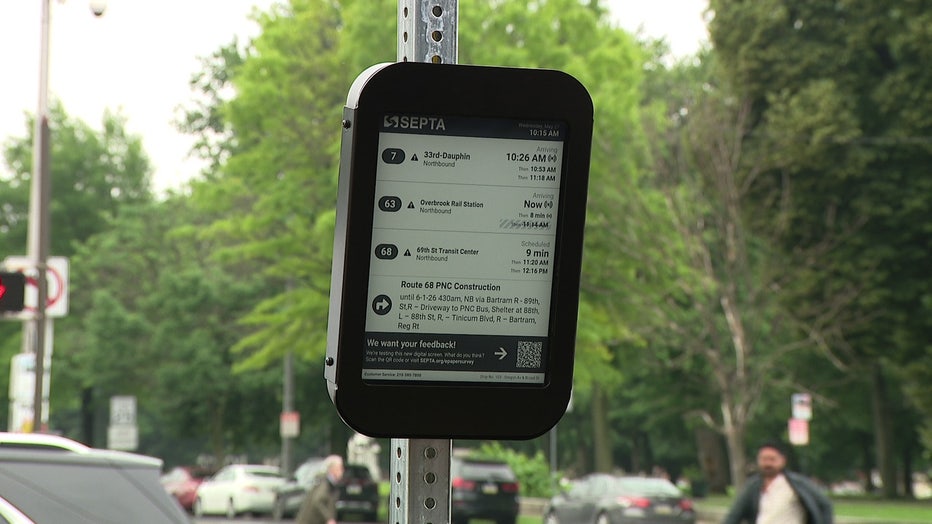
The first "real-time arrival display" is now up at the Broad Street and Oregon Avenue bus stop, according to SEPTA. Riders can see up-to-the-minute information about when their bus will arrive, displayed on a small digital screen.
SEPTA says the screens are solar-powered and include a "text to speech button" to help riders who are low-vision or blind. When the button is pressed, the system announces when buses on the route will be arriving.
Pilot locations were chosen based on customer impact and geographic equity, according to SEPTA.
Each display costs $5,000, according to SEPTA. Nine more devices are coming to bus stops, as well as T, G, D, and M Metro stations across the system:
- 40th St Trolley Portal (T2, T3, T4 & T5)
- Schuylkill Ave & JFK Blvd (9, 44, 62, 124 & 125)
- Stadium Station (M1)
- Girard Ave & Broad St (G1)
- Girard Ave & Front St (5 & G1)
- City Ave & Presidential Blvd (1, 44 & 65)
- Drexel Hill Junction Station (D1 & D2)
- 52nd St & Market St (52)
- Allegheny Ave & Kensington Ave (60)
SEPTA says the screens can also display general alerts, such as detours, upcoming diversions or canceled trips. "There’s a space in there to display general alerts that’s any information our control center pushes out to riders about detours, about upcoming diversions, canceled trips things like that," said Lex Powers, SEPTA Chief Officer of Customer Experience.
Riders say the new screens are easy to use and helpful
What they're saying:
Ashley Dixon, a SEPTA rider from South Philadelphia, said, "It could be very convenient for those who don’t have the app and unsure what the timeframe of the next bus or anything that’s occurring beforehand."
Eni Ogunlade, another SEPTA rider, said, "This is what we need here. This is very convenient for people who don’t have a cell phone or a smartphone."
General Manager Scott Sauer said, "We don’t believe this is a target for those sorts of things. This is information people want to have." Sauer also said, "We believe this will be durable. This will withstand that sort of regular use throughout its life cycle."
SEPTA is seeking rider feedback on the new technology through a QR code survey on the screen. If the pilot goes well, the plan is to expand the real-time information displays to 90 more bus stops starting this fall.
SEPTA says the $50,000 pilot program aims to improve the rider experience, especially for those without smartphones or access to the SEPTA app.
What we don't know:
SEPTA has not yet shared which additional bus stops will get the new screens if the program expands beyond the initial pilot locations.
The Source: Information from SEPTA officials and interviews with riders.