

The 60 invasive aquatic animals of 'greatest concern' in Pennsylvania waters
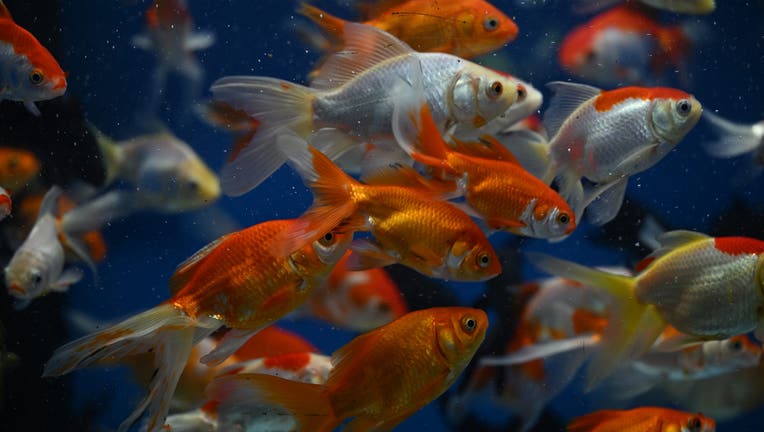
ANKARA, TURKIYE - APRIL 13: Goldfish (Carassius auratus) are seen at the aquarium as freshwater fish of different species offer a visual feast with their fin structures, interactions with light, camouflage strategies and colorful lives in Ankara, Tur
PENNSYLVANIA - Pennsylvania officials say nearly 60 invasive aquatic animal species pose risks to the state’s lakes, rivers and streams. These include highly impactful species already spreading, along with dangerous potential invaders that have not yet reached the commonwealth.
What we know:
The Pennsylvania Department of Agriculture’s list of Invasive Aquatic Animals of Greatest Concern identifies species classified as Established, Emerging, or Potential threats. Groups include fish, invertebrates, mollusks, crayfish, reptiles and more.
According to the Pennsylvania Department of Agriculture, "Almost 60 invasive aquatic animals are identified as of greatest concern for Pennsylvania, from highly impactful emerging species, like zebra mussels, quagga mussels and northern snakehead, to not-yet-present but potential major concerns, including silver carp and bighead carp. These must be prevented from being introduced."
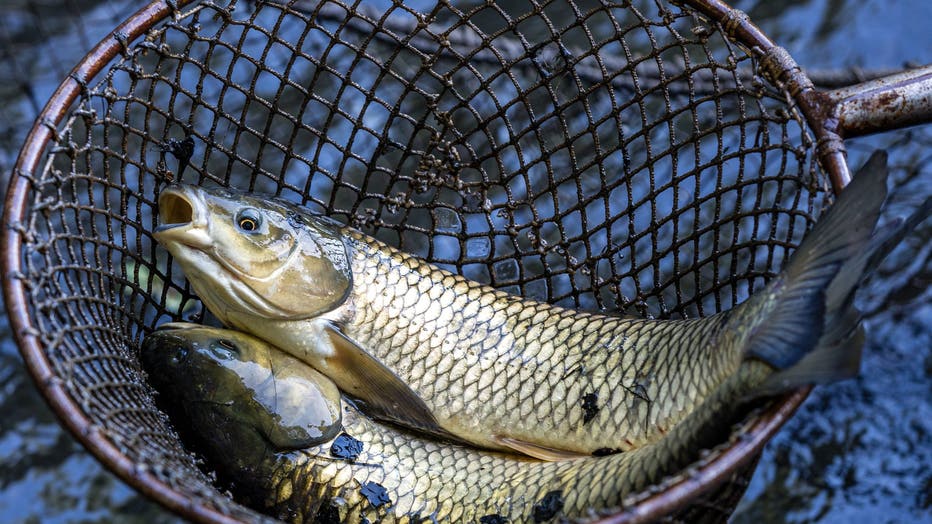
23 September 2023, Saxony, Rietschen: Two grass carp lie in a landing net. They were fished out of a pond with the help of a net. Today, Saturday, the kick-off of the Lusatian Fish Weeks 2023 in Upper Lusatia and the opening of the Saxon carp season
Once established, invasive aquatic animals can be nearly impossible to eradicate. They disrupt ecosystems, damage infrastructure and outcompete or prey on native species.
The Pennsylvania Fish & Boat Commission maintains a rapid response plan for aquatic invasive species (AIS) and urges anglers, boaters and aquarium owners to help stop their spread by cleaning equipment and never releasing pets or bait into the wild.
RELATED: These are the 28 invasive insect species of 'greatest concern' in Pennsylvania
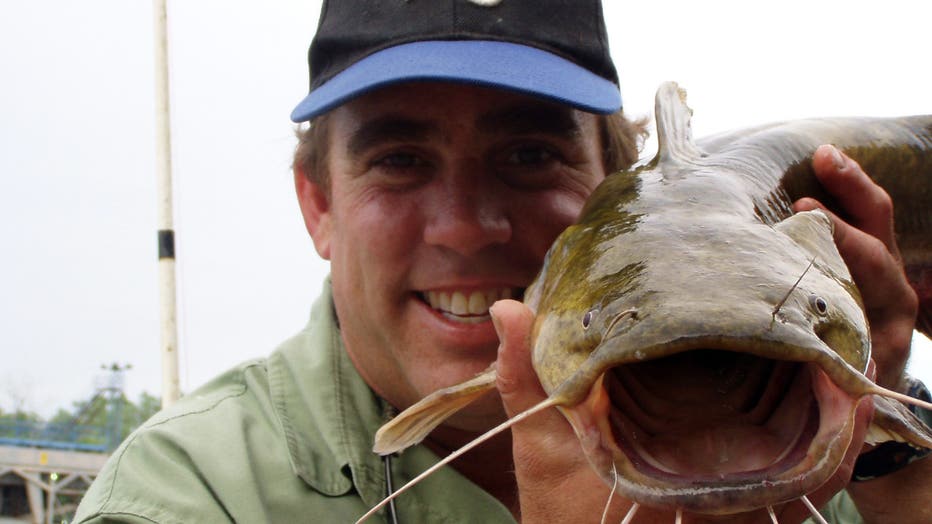
When Captain Catfish, also known as John Trager, launches his boat on the Missouri River, the flathead catfish often are in trouble, such as when he made these catches. (Photo by Brent Frazee/Kansas City Star/Tribune News Service via Getty Images)
Invasive aquatic species of note in Pennsylvania
Emerging species (detected, spreading risk)
- Bloody-red shrimp (Hemimysis anomala)
- Chinese mysterysnail (Cipangopaludina chinensis)
- Fishhook waterflea (Cercopagis pengoi)
- Freshwater tubenose goby (Proterorhinus semilunaris)
- Goldfish (Carassius auratus)
- Grass carp (Ctenopharyngodon idella)
- Japanese mysterysnail (Cipangopaludina japonica)
- Mud bithynia / faucet snail (Bithynia tentaculata)
- New Zealand mudsnail (Potamopyrgus antipodarum)
- Northern snakehead (Channa argus)
- Oriental weatherfish / pond loach (Misgurnus anguillicaudatus)
- Quagga mussel (Dreissena bugensis)
- Rainbow smelt (Osmerus mordax)
- Red swamp crayfish (Procambarus clarkii)
- Red-eared slider (Trachemys scripta elegans)
- Round goby (Neogobius melanostomus)
- Rudd (Scardinius erythrophthalmus)
- Rusty crayfish (Faxonius rusticus)
- Scud (Apocorophium lacustre)
- Scud / amphipod (Echinogammarus ischnus)
- Spiny waterflea (Bythotrephes longimanus)
- Virile crayfish (Faxonius virilis)
- Water flea (Bosmina coregoni)
- Western mosquitofish (Gambusia affinis)
- Yellow-bellied slider (Trachemys scripta scripta)
- Zebra mussel (Dreissena polymorpha)
- Flathead catfish (Pylodictis olivaris)*
- White perch (Morone americana)*
- White river crayfish (Procambarus acutus)*
(*native to some areas of PA but invasive when introduced elsewhere)
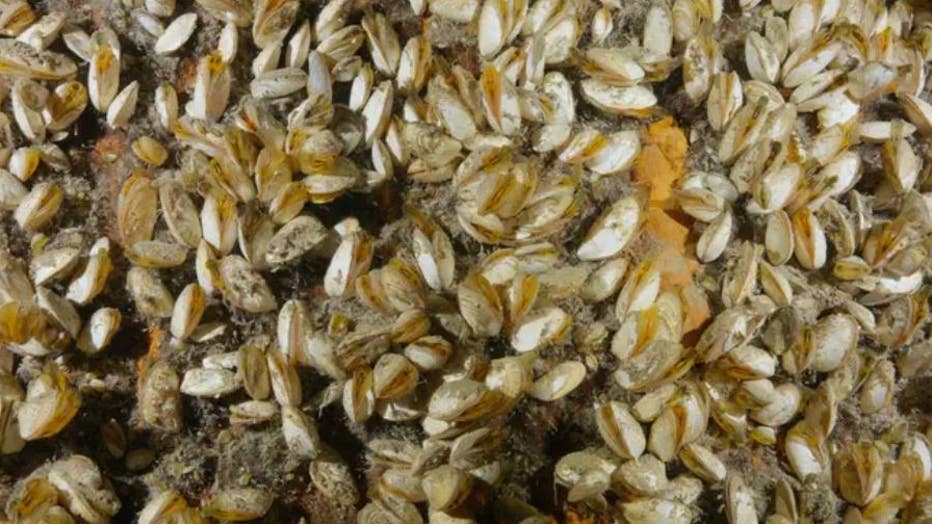
A closeup of the quagga mussels. (Inspired Planet Productions / FOX Weather)
Established species (widely present)
- Asiatic clam (Corbicula fluminea)
- Common carp (Cyprinus carpio)
- Alewife (Alosa pseudoharengus)*
- Allegheny crayfish (Faxonius obscurus)*
- Sea lamprey (Petromyzon marinus)*
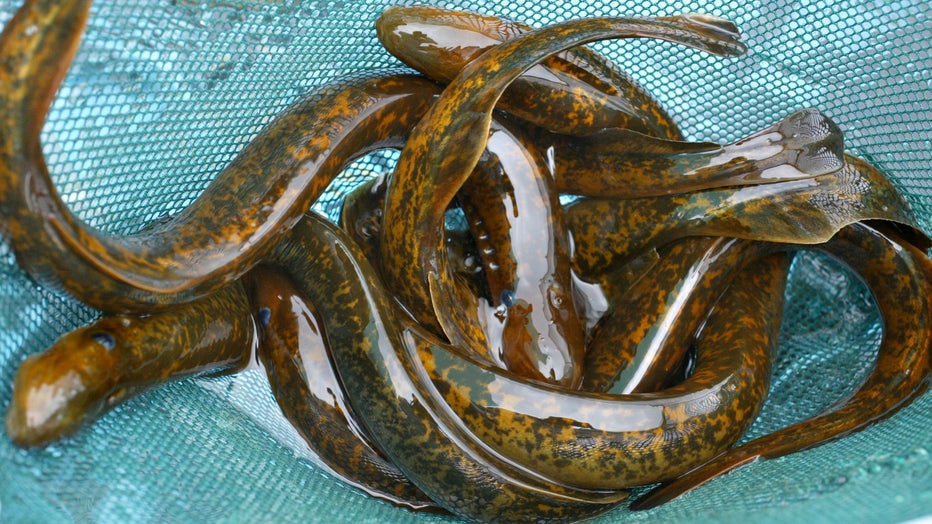
Mature sea lamprey (Photo by MARLIN LEVISON/Star Tribune via Getty Images)
Potential species (not yet in PA, but high concern)
- African clawed frog (Xenopus laevis)
- Banded mysterysnail (Viviparus georgianus)
- Big-eared radix (Radix auricularia)
- Bighead carp (Hypophthalmichthys nobilis)
- Black carp (Mylopharyngodon piceus)
- Blotched snakehead (Channa maculata)
- Blue tilapia (Oreochromis aureus)
- Calico crayfish (Faxonius immunis)
- Carter’s moss animal (Lophopodella carteri)
- Chinese pond mussel (Sinanodonta woodiana)
- European fingernailclam (Sphaerium corneum)
- European stream valvata (Valvata piscinalis)
- Giant snakehead (Channa micropeltes)
- Golden mussel (Limnoperna fortunei)
- Greater European peaclam (Pisidium amnicum)
- Ide (Leuciscus idus)
- Marbled crayfish (Procambarus fallax f. virginalis)
- Pink salmon (Oncorhynchus gorbuscha)
- Red shiner (Cyprinella lutrensis)
- Redbelly tilapia (Tilapia zillii)
- Ruffe (Gymnocephalus cernuus)
- Silver carp (Hypophthalmichthys molitrix)
- Blue catfish (Ictalurus furcatus)*
- Alabama bass (Micropterus henshalli)
(*native in some U.S. waters but invasive when introduced elsewhere)
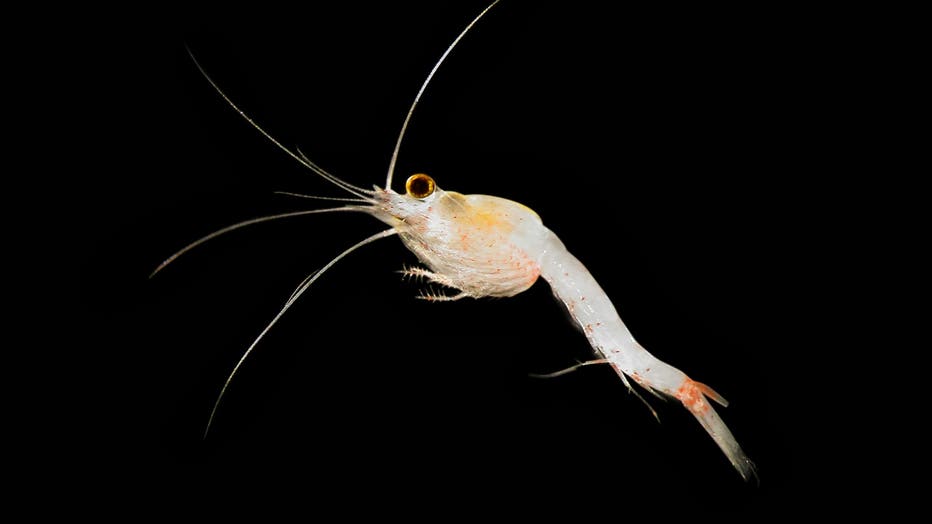
BOURGET LAKE, FRANCE - FEBRUARY 28: bloody-red mysid on February 28, 2012 in Bourget Lake, Savoie, France. The bloody-red mysid, (Hemimysis anomala), a shrimp-like crustacean in the Mysida order, native to the Ponto-Caspian region, which has been spr
Why you should care:
These species can cause major ecological and economic damage. Invasive mussels attach to infrastructure, clogging pipes and fouling surfaces. Crayfish or predatory fish disrupt food webs and prey on native species. Some, like snakeheads, are aggressive predators that can move between water bodies.
Because they often hitchhike on boats, equipment, bait, or in aquaria, human activity is a key driver of spread. That’s why agencies stress cleaning gear, draining water, and never releasing pets or bait into wild waters.
The Source: Information in this story is drawn from the Pennsylvania Invasive Aquatic Animals list and the PA Fish & Boat Commission’s aquatic invasive species resources.