

What is NAION? Ozempic, Wegovy, other GLP-1s linked to rare eye condition
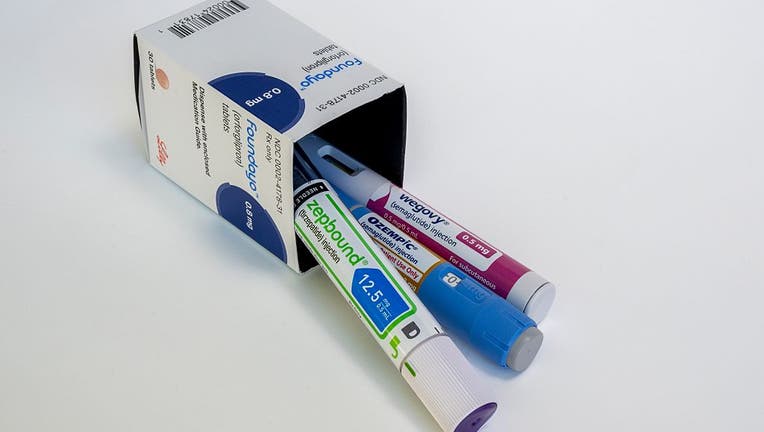
Photo illustration of Wegovy, Ozempic; Zepbound and Faundayo on a white background. (Photo by: Michael Siluk/UCG/Universal Images Group via Getty Images)
The U.S. Food and Drug Administration (FDA) is mandating new safety labels for popular diabetes and weight-loss medications following investigations into a rare eye condition.
What they're saying:
According to a November 2026 safety communication, medications in the GLP-1 class carry a potentially increased risk for non-arteritic anterior ischemic optic neuropathy (NAION), a serious condition that can lead to acute, painless, and sometimes permanent vision loss.
The FDA is now requiring the manufacturers of all GLP-1 medications to add NAION information to the "Warnings and Precautions" section of their drug labels.
Which medications are included?
What we know:
The FDA's warning applies to all approved GLP-1 drugs, which include:
- Ozempic, Wegovy, Rybelsus (Semaglutide): Diabetes, weight loss, and cardiovascular risk reduction
- Mounjaro, Zepbound (Tirzepatide): Diabetes and weight loss
- Trulicity (Dulaglutide): Diabetes and cardiovascular risk reduction
- Victoza, Saxenda (Liraglutide): Diabetes and weight loss
- Foundayo (Orforglipron): Diabetes and weight loss
"NAION cases have been reported for all currently marketed GLP-1 RA products," the report states. "FDA concluded that there is a potential increased risk of rare NAION events in patients taking GLP-1 RAs. Based on these findings, FDA is requiring that application holders add information about the risk for NAION to the Warnings and Precautions section of labeling of all GLP-1 RAs."
FDA recalls GLP-1 drug, other injectable medication over sterility concerns
Apothecary Pharma is recalling 23 vials of compounded injectable drugs distributed nationwide because their sterility cannot be assured, according to the Food and Drug Administration.
What is NAION?
Dig deeper:
NAION occurs when there is a sudden drop in blood flow to the front part of the optic nerve. While the exact underlying cause of this restricted blood flow isn't fully understood, it effectively acts like a stroke in the eye, damaging the nerve that sends visual information to the brain.
Certain pre-existing conditions overlap with the reasons people take GLP-1s. Known risk factors for NAION include:
- Diabetes
- High blood pressure
- Sleep apnea
- Kidney disease
- Anemia
- A history of smoking
If a patient develops NAION in one eye, they are at a significantly higher risk of eventually developing it in the other eye.
How to navigate Thanksgiving dinner on a GLP-1
Balanced portions can help people taking GLP-1s enjoy Thanksgiving while limiting digestive discomfort.
How big is the risk?
Why you should care:
While the warning is serious, the FDA notes that NAION remains a rare condition.
Prompted by a July 2024 medical study, the FDA reviewed data from 126 clinical trials covering over 134,000 patients. They found that out of every 100,000 people taking GLP-1 medication for one year, about 6.4 people experienced a NAION event. By comparison, only 3.8 people out of 100,000 experienced it while taking a placebo or older, non-GLP-1 diabetes drugs.
Subsequent reviews of real-world commercial data also confirmed a slight but statistically notable increase in NAION cases for patients on GLP-1s compared to those taking older diabetes medications like DPP-4 inhibitors.
Symptoms
What you can do:
The FDA advises patients to contact their healthcare provider immediately if they experience any of the following symptoms, particularly upon waking up:
- Sudden, painless loss of vision in one eye
- Blurred vision or hazy central spots
- Missing portions of vision, such as blind spots or tunnel vision
- Distortion of colors
The Source: Information from this article was sourced from a U.S. Food and Drug Administration drug safety communication on November 9, 2026.