

Why Artemis II astronauts didn't land on the moon

Artemis II, NASA release NEW photos of moon's far side
Dr. Adrienne Dove, a researcher and professor with the University of Central Florida joins FOX 35's Garrett Wymer live via Zoom to react to the new photos of the moon's surface and Earth from the Artemis II Orion capsule and the astronauts on board the Artemis II mission.
ORLANDO - More than 50 years after NASA’s last Apollo mission, four astronauts headed back to the moon. But this time, they didn’t land on it.
Instead, the astronauts on the Artemis II mission flew around the moon with the plan to return to Earth after about 10 days, traveling farther into space than any humans have in decades.
The plan may seem surprising, especially since NASA successfully landed astronauts on the moon six times starting in 1969.
So why go all that way — and not touch down?
Why Artemis II astronauts didn’t land on moon
Big picture view:
According to NASA, the Artemis II mission was designed as a crewed lunar flyby, a critical and necessary test of NASA’s deep-space systems before attempting future landings on the moon.
NASA’s current Artemis program was built as a step-by-step process, and this mission was meant to test the systems, not complete a landing.
As part of a Golden Age of innovation and exploration, NASA said it would send Artemis astronauts on challenging missions to explore more of the Moon for scientific discovery, economic benefits, and to build on NASA’s foundation for the first crewed missions to Mars.
What they're saying:
"This mission will verify Orion’s life support systems can sustain astronauts on longer-duration missions ahead and allow the crew to practice operations essential to Artemis III and beyond," NASA told FOX Local in a statement.
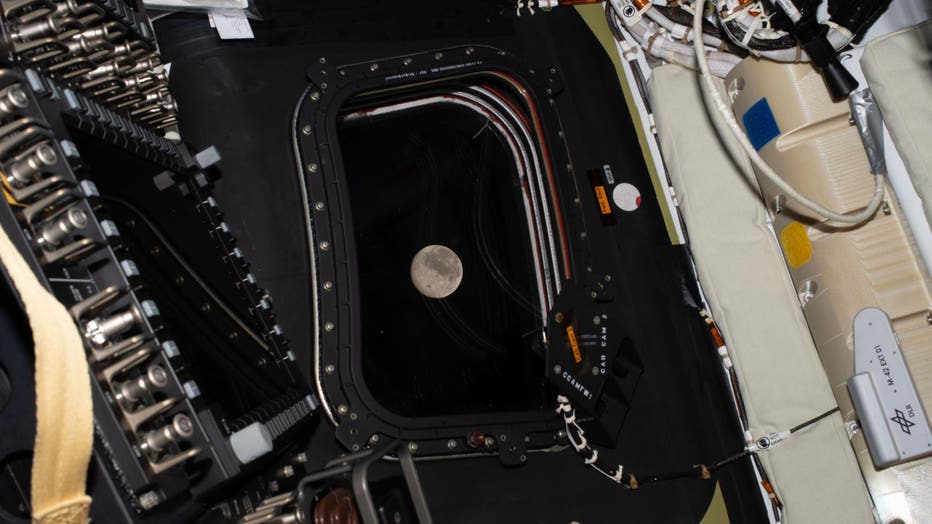
A view of Earth taken by NASA astronaut and Artemis II commander Reid Wiseman from one of the Orion spacecraft's four main windows after completing the translunar injection burn on April 2, 2026. (Credit: NASA)
Dig deeper:
Furthermore, the Orion spacecraft the astronauts are flying in is not capable of landing, and NASA is taking a cautious approach before attempting something more complex.
As The New York Times recently reported, space technology has changed dramatically since the Apollo missions ended in 1972, and even with modern advances, engineers expect that some things may not work perfectly on the first try. Artemis II is meant to find and fix those problems early, according to the news outlet.
Another key reason is that NASA does not yet have a working lunar lander. Companies like SpaceX and Blue Origin are currently developing spacecraft designed to carry astronauts from orbit down to the moon’s surface, but those vehicles are not ready yet.
NASA is aiming for future landing missions later in the decade, possibly around 2028.
What they're saying:
"The Artemis II test flight will confirm the systems necessary to support astronauts in deep space exploration and prepare to establish a sustained presence on the moon," NASA told FOX Local. "The primary goal of Artemis II is a crewed test flight in lunar space."
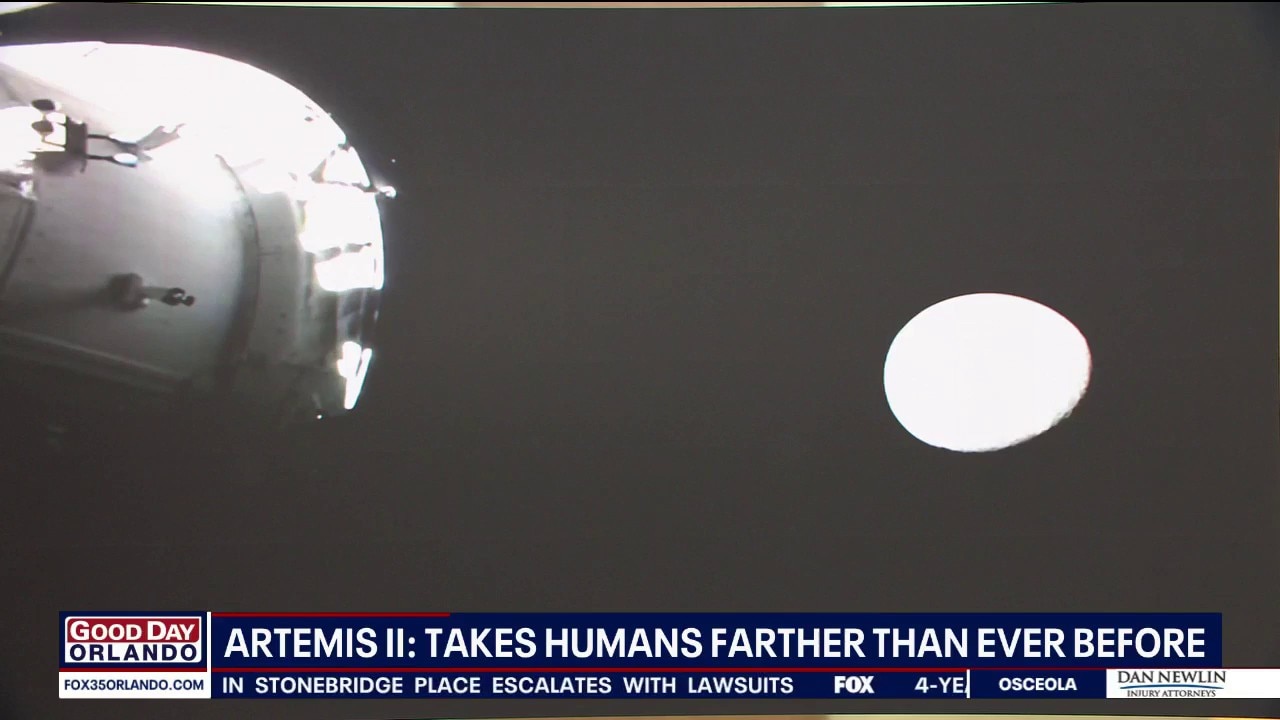
Artemis II makes history, sets space distance record
NASA's Artemis II mission reached a major milestone in space exploration. The crew traveled the farthest from Earth than any humans ever before, breaking the record set by Apollo 13 in 1970. Dr. Addie Dove, a planetary scientist and associate professor at the University of Central Florida, joins Good Day Orlando to talk about the mission.
Artemis II also builds on earlier testing. In 2022, Artemis I successfully sent an uncrewed Orion spacecraft around the moon and back, proving that the powerful Space Launch System rocket could work as planned. Artemis II took the next step by adding astronauts on board.
Bottom line: By confirming that astronauts can safely travel to deep space and return, Artemis II will help pave the way for later missions that will land on the moon again. Those future missions are expected to support long-term scientific research and eventually help prepare humans for even more distant journeys, including missions to Mars.
Artemis II launch
The backstory:
Artemis II lifted off from Kennedy Space Center in Florida on April 1, the start of a 10-day mission to the moon and back.
RELATED: Artemis II: Photos of moon, Earth, space from NASA, CSA astronauts
"Today, for the first time since Apollo 17 in 1972, humans have departed Earth orbit. Reid, Victor, Christina, and Jeremy now are on a precise trajectory toward the Moon. Orion is operating with crew for the first time in space, and we are gathering critical data, and learning from each step," Dr. Lori Glaze, acting associate administrator for the Exploration Systems Development Mission Directorate at NASA Headquarters in Washington, said after the launch. "Each milestone we reach marks meaningful progress on the path forward for the Artemis program. While we have eight intensive days of work ahead, this is a big moment, and we’re proud to share it with the world."
What's next:
Artemis II is scheduled to splash down on the evening of April 10 off the coast of San Diego, California.
In 2027, Artemis III will do low-orbit demonstration flights of one or both commercial Landers from Space and Blue Origin. It will also be a crewed mission to test "rendezvous and docking capabilities between Orion and private commercial spacecraft needed to land astronauts on the Moon."
In early 2028, Artemis IV mission's goal is to land humans on the moon and have them transfer from the Orion spacecraft to a lunar lander. The goal is to figure out whether SpaceX's or Blue Origin's will house the astronauts. Work here will also be to standardize the SLS rocket.
NASA said it then envisions yearly launches.
The Source: This story was reported from Los Angeles. NASA, The New York Times, FOX News, Space.com contributed.