

Pennsylvania schools will be required to teach cursive again starting in April
(Photo by Marvin Joseph/The Washington Post via Getty Images)
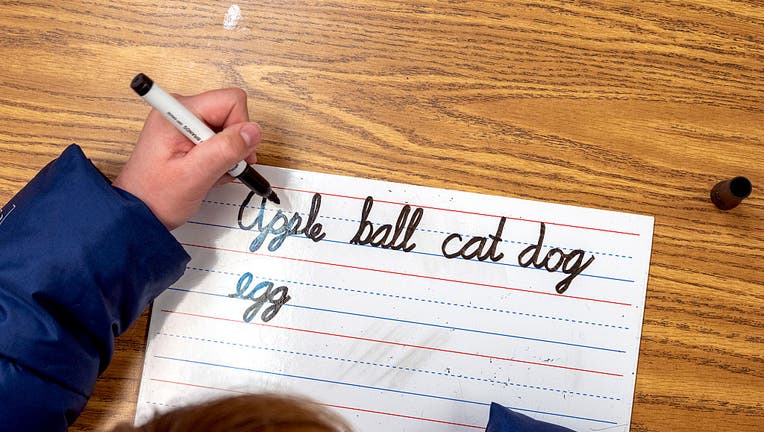
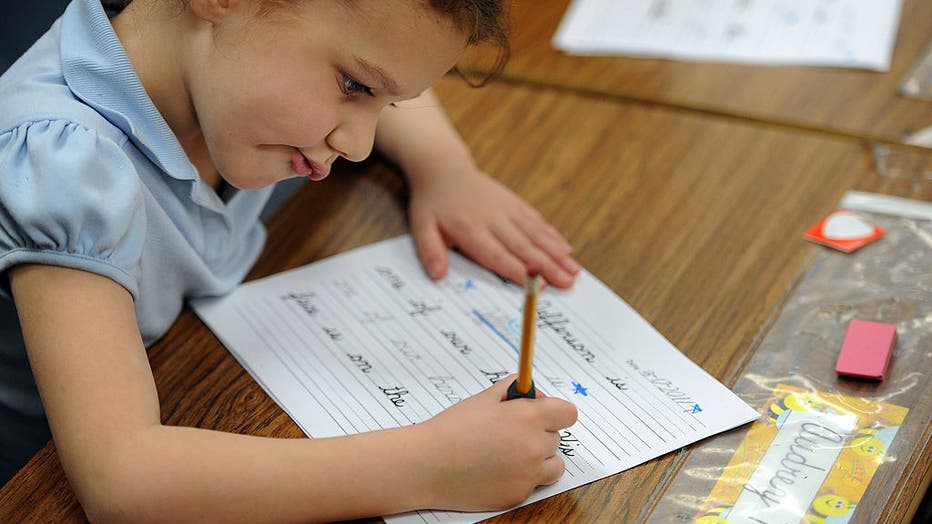
PENNSYLVANIA - Starting next month, all public and private schools in Pennsylvania will be required to reintroduce cursive handwriting into their curriculum.
The new law, which was signed by Gov. Josh Shapiro in February, makes it so "instruction in cursive handwriting or joined italics" will be taught at the "appropriate grade levels."
Strong bipartisan support
What we know:
The law amends the state’s Public School Code of 1949 to add printing, joined italics and cursive handwriting to the required writing curriculum for all students.
The legislation received bipartisan support in the General Assembly, passing the House 195‑8 and the Senate 42‑5 before being signed by the governor.
The mandate officially goes into effect on April 12.
(Photo By Joe Amon/The Denver Post via Getty Images)
Cursive as 'a bridge'
What they're saying:
The bill was sponsored in the Pennsylvania Senate by Sen. Wayne Langerholic (R-Clearfield), who said in a statement issued last month that "by reintegrating cursive into the curriculum…we are investing in our students’ cognitive development, strengthening their legal preparedness and preserving their connection to historical literacy."
The House sponsor, Rep. Dane Watro (R‑Luzerne/Schuylkill), said proponents believe the skill supports fine motor development and access to historical documents written in script.
"Cursive is more than handwriting. It’s a bridge," Watro said in a statement last month. "It connects us to our history, strengthens learning and deepens our understanding of the world. By teaching cursive, we’re equipping students with skills that sharpen the mind and safeguard our shared heritage."
What studies say (and don't say) about cursive in schools
Dig deeper:
In 2010, the Common Core Standards for K‑12 education did not include cursive handwriting, focusing instead on print handwriting in the early grades. The standards also encouraged the use of technology for producing and publishing writing, which included keyboarding skills at certain grade levels. The initiative was part of an effort to streamline and standardize education across the 50 states.
Despite this, more than half of U.S. states still require or encourage cursive instruction in the classroom, according to Education Week. In 2016, that number was just 14 states.
(Photo By RITA REED/Star Tribune via Getty Images)
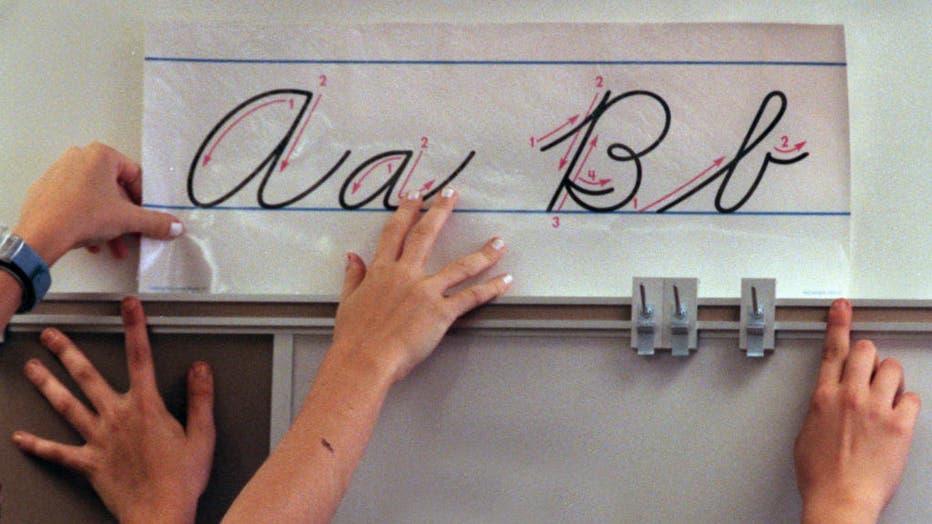
Neuroscience research shows that handwriting — particularly cursive — activates broader brain networks tied to language, memory, attention and motor planning more than typing, which can support deeper learning and memory retention. Other studies indicate that cursive practice improves writing fluency, speed, fine motor coordination, spelling accuracy and expressive writing, although direct causal links to cognitive improvement remain under study.
Still, experts note that most research links these benefits to handwriting in general, not cursive specifically, highlighting a need for further study.
Official guidance is coming
What's next:
The Pennsylvania Department of Education is developing official guidance this spring that will outline when (by grade level) and how schools should implement cursive instruction, according to department spokesperson Erin James, who spoke with The 74, a nonprofit outlet which covers U.S. education.
James added that the guidance will also provide practical assistance and clear expectations, so teachers can adjust schedules and lesson plans, and may include recommendations on teacher professional development and curriculum materials to support effective instruction.
What we don't know:
As such, how exactly this new law will be implemented statewide remains to be seen.
The Source: Information above was sourced from the Pennsylvania General Assembly, statements from Pennsylvania lawmakers, the 2010 Common Core Standards for K‑12 education, Education Week, several different studies and The 74.